Descrizione del prodotto
Descrizione del prodotto
Belt Drive Linear Xihu (West Lake) Dis. Rails:
The belt drive linear guide rails are driven by a synchronous belt, can easily realize the long stroke and large range of motion. Using aluminum structure, the max stroke can reach 3900mm, max speed up to 3000mm/s. rail width: 60mm, 80mm,100mm.
Applicazione:
Laser cutting machine, PV back sheet cutting engraving machine, transportation mechanical arm, electric research test function demonstration, various of the industrial automatic production lines, kinds of precision machinery processing.
Optional Accessories:
Power supply, drive, limit switch, controller, connection board, drag chain, brake, servo motor, and the stepper motor are available.
Product Parameters
| Position Accuracy: | ±0.05mm | ||
| Motor Holding Torquer (Nm) | 7.5 | ||
| Synchronous Wheel Circumference (mm) | 90 | ||
| Max Horizontal Loadings (kg) | 40 | ||
| Max Vertical Loading (kg) | Not recommend | ||
| No-load Speed (mm/s) | 3000 | ||
| Max Horizontal Full Speed (mm/s) | 1200 | ||
| Max Vertical Full Speed (mm/s) | 1050 | ||
| Rated Acceleration (mm/s2) | 3000 | ||
| Maximum thrust (N.m) | 170 | ||
| Dynamic Permissible Torque | MA=520 | MB=400 | MC=400 |
Foto dettagliate
Profilo Aziendale
ZheJiang UMot Technology Co., Ltd. specializes in R&D and sales of stepper motors, servo motors, linear modules and related motion control products, customizing and designing high-quality motor products for users with special needs around the world, and providing overall solutions for motion control systems. Products are exported to more than 30 countries and regions including the United States, Germany, France, Italy, Russia, and Switzerland. The company’s main products and system design have been widely used in automation control, precision instruments, medical equipment, smart home, 3D printing and many other fields.
Our company has been recognized as a high-tech enterprise by relevant departments, has a complete quality management system, has obtained ISO9001, CE, RoHs and other related certifications, and holds a number of electrical patent certificates. “Concentration, Professionalism, Concentration” in the field of automation of motor R&D and system control solutions is the company’s business purpose. “Be your most trusted partner” is the company’s service philosophy. We have always been aiming to “make first-class products with professional technology”, keep pace with the times, innovate constantly, and provide more users with better products and services.
FAQ
1. Shipping method:
1)International Express delivery DHL&FEDEX &UPS&TNT& 7-10days
2)Shipping by air 7-10 days
3)shipping by sea, delivery time depends on the destination port.
2. Technical Support:
We can provide you with professional technical support. And our products quality guarantee is 6 months. Also, we accept products customized.
3. Why should you buy from us, not from other suppliers?
Professional one-to-1 motor customized. The world’s large enterprise of choice for high-quality suppliers. ISO9001:2008 quality management system certification, through the CE, ROHS certification.
4. How to select models?
Before purchasing, please contact us to confirm model No. and specifications to avoid any misunderstanding.
5. Are you a factory?
Yes, we are a factory, and we produce stepper motor/driver, Servo motor/driver.
| Applicazione: | Medical Devices |
|---|---|
| Materiale: | Aluminium |
| Structure: | CNC Machine |
| Installation: | Automation Production Line |
| Tipo di azionamento: | DC |
| Portata: | Middle-Level |
| Esempi: |
US$ 710/Piece
1 pezzo (ordine minimo) | |
|---|
| Personalizzazione: |
Disponibile
| Richiesta personalizzata |
|---|
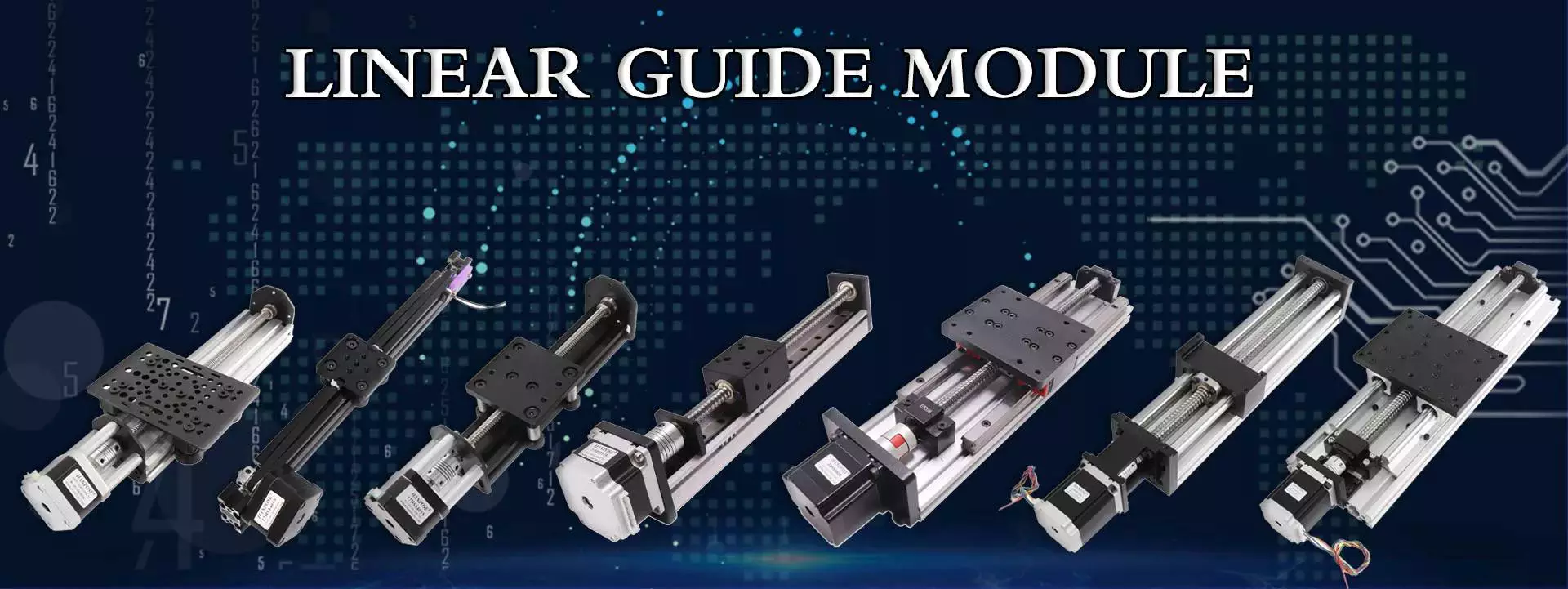
Choosing a Linear Rail
Whether you are using a linear rail for your business or home, you will find that there are some key considerations that you must keep in mind. These include the stability and accuracy of the system, as well as the cost of the rail.
Cost of linear rails
Choosing the right rail can be crucial to the performance and cost of a machine. There are many different types, with different levels of accuracy, load bearing capacity and rigidity. Some of the more common choices are drilled, profiled and undrilled.
The cost of linear rails can vary drastically depending on the type. Some are made from hardened steel, while others are fabricated from aluminum extrusions. Both types offer different advantages and disadvantages.
Rails that have been manufactured with aluminum extrusions will offer better rigidity. These rails also provide a larger range of motion.
Linear rails are generally used in mechanical systems that need high precision. These components must be fully supported and protected while being assembled. The assembly process is complex and time consuming.
These components are used in a wide variety of industrial applications. They can be used for transporting loads between two points or for guiding a moving part in linear motion.
Linear rails are usually manufactured from hardened steel, which is corrosion-resistant. Stainless steel is also commonly used. High-strength steel is also used. It is also known as cold drawn steel.
Rails have a high load bearing capacity and can handle loads from a few grams to a few tons. They offer smooth motion and can also be used to support overhung loads. Linear rails are generally used in automation machinery. They are also used in laser welding machines and bending machines.
Rigidità
Using a linear rail is a common solution for many industrial applications. These linear guides are known for their rigidity and load-bearing capabilities. They are designed to accommodate a wide variety of uses, including precision motion, high load capacities, and high speed operation.
These linear guides are available in various sizes and shapes, including cylindrical rollers, spherical balls, and race profiles. Each type offers different load capacities, speeds, and accuracy levels. They are typically used in applications that require precision, such as machine tools.
They are typically fixed at the ends. They are designed to transfer weights along a predetermined vertical or horizontal course. Linear rails are usually made of toughened steel. They require hex slot screws along the length of the rail. They are also used to guide actuators driven by screws or belts.
These linear guides are designed to offer high travel accuracy, which is important for many machine tools. They also offer high rigidity, which is needed to support heavy loads.
The stiffness of a linear rail is generally higher than that of a round rail. They can handle travel speeds up to 5 meters per second. They can support thousands of kilograms. They are also less likely to bend under heavy load, which can prevent misalignment problems.
Linear guides are often used in pneumatic-driven systems. They also have a rolling-friction operation mode. This reduces friction, which helps the machine tool to run smoothly.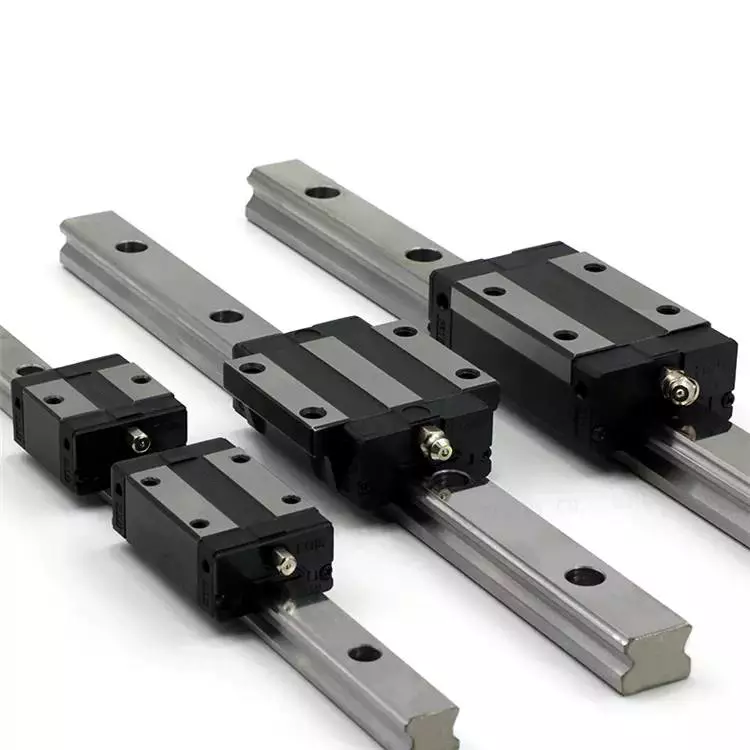
Accuracy
Choosing the best linear rail depends on the application and the level of accuracy required. Some applications require high accuracy, while others are less demanding. A guide rail that has the right amount of preloading can minimize the effect of misalignment and sinking.
Rails are designed to withstand a variety of loads from a few grams to several tons. They can also handle moment and lift-off loads. Linear rails are made from high-strength steel that is galvanized.
A variety of processing methods are used to manufacture rails. Rails are available in square and round shapes. They can also be shaped to fit into smaller spaces.
The most accurate linear rail is the one that meets all of the above requirements. It can be difficult to know which rail is best for your application. It is important to consider the application and the total load conditions during the lifetime of the system.
It is also important to choose the most appropriate accuracy class for your application. Choosing the accuracy class of a rail is partially dependent on the positioning of the load and the mounting arrangement of the bearings.
For instance, the best accuracy class for a rail would be one that has a high preloading rate. This will increase the rigidity and minimize the effect of sinking. It will also increase the life of the component.
A linear rail that has a high preloading rate also has a higher accuracy class. This is because it will compensate for a lack of accuracy in the mounting surface.
Stability
Whether you’re moving items through a production process or handling heavy loads, you’ll appreciate the reliability and precision of a linear rail. It’s also important to consider the stability of your linear rail.
It’s important to design your linear rail with a complete support structure to prevent deflection. This may include mounting it on an I-beam support. This supports heavy loads and eliminates deflection concerns.
Linear rails also offer a wide range of motion, including the ability to support overhung loads. They are also suitable for guiding weights, providing a smooth motion in a single axis.
A single linear rail can also be used to guide actuators driven by screws or belts. These are commonly used in industrial applications. However, they may not be ideal for consumer applications.
For a more robust solution, you may consider using a dual rail. Dual linear rails maximize bearing life, and minimize deflection. These can also be anchored to aluminum extrusion profiles to improve stiffness.
Various types of materials can have a dramatic impact on the cost and performance of a project. These include stainless steel, which is corrosion-resistant and cold drawn. Other options include aluminum extrusion profiles and cylinders, which can reduce mechanical stresses.
In addition, the level of stiffness of your rail may be critical to its operation. In some applications, a rail may have to flex slightly in one plane. Using a cylinder instead of a sphere can also reduce play.
Carrello scorrevole e binario
Known for their rigidity and load-bearing capabilities, linear slides are ideal for applications that require repeatable motion. However, these units have a variety of components that can complicate their integration into your machine. Fortunately, there are a variety of products available that can help you find the right slide.
The main components of a linear slide include the carriage, bearings, guide rails, and control systems. The bearing system determines the accuracy of the slide.
Bearings can be a variety of shapes, including cylindrical and ball. They can be plain or filled with PTFE, ceramic, or metal. A ball screw drive with a motor may be necessary for stiff, reproducible slides. In less expensive applications, a round shaft system may be the best option.
Typically, the carriage is attached to the rail. The rail supports the carriage while it moves, and it can be a round rail, profiled rail, or linear stage. The carriage can be made of stainless steel, aluminum, granite, or other materials. Its threaded holes can be used for mounting tooling.
Carriage designs can be based on plain bearings, ball bearings, or cross rollers. Aside from simple surface bearings, these designs require lubrication. In less expensive applications, plain bearings may be sufficient.
Roller bearings are cylindrical roller load-bearing elements. They are used in track rollers and cam rollers. The rollers are inside the carriage and rotate with the carriage.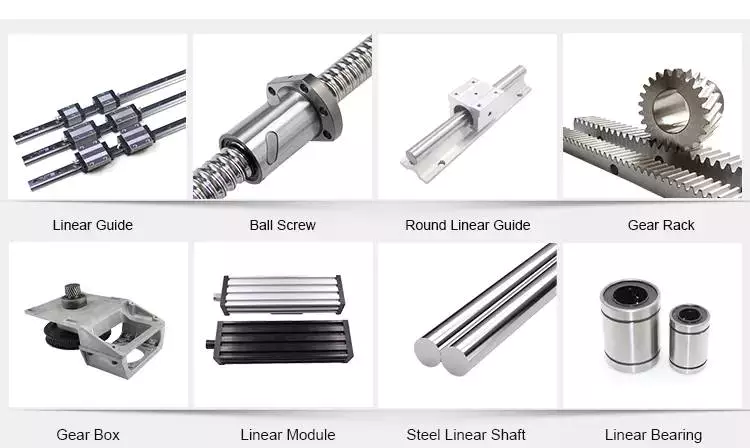
Applicazioni
Whether you’re building an industrial automation system or simply need to move a load, the right linear guide can be a valuable tool. The benefits include high load capacity, reduced friction, high rigidity and increased accuracy.
The applications of linear rails can range from simple machine-tool applications to advanced medical applications. The most common applications include transportation and industrial machinery. However, the applications can also be found in the consumer space. Consumer health monitoring devices are a great example of applications that take advantage of linear motion.
Linear rails are a linear assembly consisting of load-supporting balls on each side and a pair of parallel tracks. Depending on the size and type of application, the load capacity can range from a few grams to several tons.
Linear rails are typically made from high-strength steel, which is profiled or galvanised. The rail is then cut to a specified length. Depending on the size, the cost of a linear guide rail will vary.
The linear rail’s name is a mouthful, but there are several models to choose from. Profiled rail guides are most suitable for high load applications.
The CZPT is a great choice for heavy-duty applications. It’s easily weldable, and can be ground smooth for easy transitions. The rail can be extended to long travel lengths.
The linear rail’s most notable attribute is its ability to withstand overhung loads. The rail can also handle moment and horizontal loads.

editor by CX 2023-11-22
China Automatic Gantry Robot Linear Modules Slide XYZ Axis Multiaxial Rail Motion Guide Actuator Ball Screw Motor linear actuator linear rail end stop
Condition: New
Warranty: 3 months
Applicable Industries: Building Material Shops, Manufacturing Plant, Machinery Repair Shops, Construction works , Energy & Mining, Food & Beverage Shops, Advertising Company, peek gear manufacturer customized CNC machine gear module 0.3 gear BOAT
Weight (KG): 10
Video outgoing-inspection: Provided
Machinery Test Report: Provided
Marketing Type: New Product 2571
Warranty of core components: 1 Year
Core Components: Bearing, Gearbox, Motor
Model Number: 40
Material: stainless steel
Name: linear actuator for solar tracker
Input Voltage: 220V
Load: 10000N
Speed: 500mm/s
Color: black/silver
Noise Level: <60dB
Limit switch type: Built-in
Operation temper: -26 – 65°C
Protection class: IP66
Packaging Details: Bulk Cargo of Wooden Containers and Containersbuyers generally speaking bear the change of packing
Porto: Hangzhou
high speed high precision linear guide rail linear motor linear motion
1. CE Certificate.
2. MOQ:1
3. Germany technology.
4. We have a wide range of linear actuator for CZPT customer.
5. Short deliver time for sample order, just 1-5 working days.
6. Good after-sale service.
7. Low noise.
8. Paypal is accepted.
Electric actuators in construction machineryDurability and reliability are the main concerns when operating heavy-duty construction machinery. Materials and applications need to be able to work relentlessly through extremely harsh working environments, and staff must be kept safe at all times. Using well-proven electric actuator solutions, you will be able to offer:
Company Information
Company Certificate
Related Products
OUR ADVANTAGES
Imballaggio e spedizione
FAQ
Q1: Isit ok for you to make customer’ 3HP2.2KW Industrial heavy-duty type belt driven air compressor_W0.36150LV s brand? A1: Yes, we can make customized brand.
Q2: do you have it in stock? A2: some products are available in stock and can be delivered
within 7 days.Q3: how long does it take for mass production? A3: according to the quantity, about 30-60 days.Q4: which payment method is acceptable? A4: T / T, L / C. western union.Q5: how to ensure the quality? A5: We have a strong team, special design, exquisite production
technology and exquisite materials and exquisite workmanship.Q6: what’s your MOQ? A6: the minimum order quantity is 500 PCs. Of course, 2571 New Product Fire Brick Concrete Mixers For Refractory
we can accept small trial orders for some products.

Applications and Maintenance of a Linear Rail
Whether you are looking to install a linear rail or you are looking for ways to maintain your existing one, there are some important factors to consider. In this article, you will learn about the applications for linear rails, the maintenance of a linear rail, and some of the common issues associated with linear guides.
Common issues with linear guides
Choosing the right linear guide can yield significant advantages in performance, cost and durability. However, it isn’t enough to just pick the right guide. To ensure maximum performance, you need to understand the components and technologies that go into the design. This article will highlight some of the most common problems associated with linear guides, and how to avoid them.
The most important thing to remember about a linear guide is that it is a component of a system. It should not be operated alone. If a linear guide fails, you’ll need to take steps to get it repaired.
A good way to gauge how well a guide will perform is to look at the load moments it carries while on a wall. This will tell you how much the guide can support over a full run of travel.
One of the most important things to consider is the type of mounting you use. It should match the precision of the guide unit. The mounting surface should be flat, and there should be no gaps or wiggles between the guide unit and the mounting surface.
The right kind of mounting will not only make installation easier, but will also ensure that your guide unit operates at its best. In addition, it can help prevent contamination from getting into the guide unit.
Another thing to consider is the quality of the lubricant. Linear guides are prone to corrosion, so it’s important to lubricate them regularly. You can do this by adding a high-quality lubricant that’s resistant to corrosive substances.
Using a linear guide with a good seal can help avoid corrosion. A good seal should have sealing lip that fits tightly around the ball guide profile. In addition, you should consider a thicker lubricant, such as calcium soap, as opposed to standard greases in wet environments.
Another thing to consider is how you can best align the guide unit. For example, you can use a high-speed end cap to reduce misalignment. This will reduce binding, as well as prevent a buildup of dirt and other debris between the guide unit and the mounting surface.
Common applications for linear rails
Across industrial applications, there are many uses for linear rails. Linear rails provide an extremely effective way of moving products and items through production processes. They offer excellent load capacity, low friction and high stiffness.
Linear rails can be manufactured in short or long lengths. These systems are ideal for moving loads from a few grams to thousands of kilograms. Depending on the specific application, the load capacity of the rail may vary.
Linear rails are commonly used in machine-tool applications and semiconductor manufacturing. Linear rails are also used for moving heavy equipment through factory floors. Linear rails are also used in advanced medical applications.
Linear rails can be used on a variety of surfaces. Depending on the type of application, the orientation of the rail may vary. This depends on the type of load and the amount of force being applied. It may also be influenced by the amount of dirt and dust.
Linear rails are designed to support loads from a few grams to thousands of kilograms. They are used in a variety of industries, including semiconductor manufacturing, packaging and medical devices. In many applications, linear rails are also used as the guide for actuators. Linear rails are a useful alternative to complex alignment operations.
Linear rails are often used in overhead transport systems. Linear rails are usually made of high strength steel and are profiled for maximum rigidity. They also have nickel-plating for corrosive environments.
Linear rails are often used in factory floors for heavy equipment, like moving robot arms. These systems can be used to move items around the factory floor or on high platforms above walkways. Linear rails are also used in the food and beverage industry. They are commonly used in weighing machines and CNC machines.
Linear rails are ideal for moving products with minimal friction. They also are used in semiconductor manufacturing, where the need for precision is crucial. Linear rails provide high load capacity and can accommodate travel speeds of up to five meters per second. Linear rails are also used in many transportation lines, including ice machines.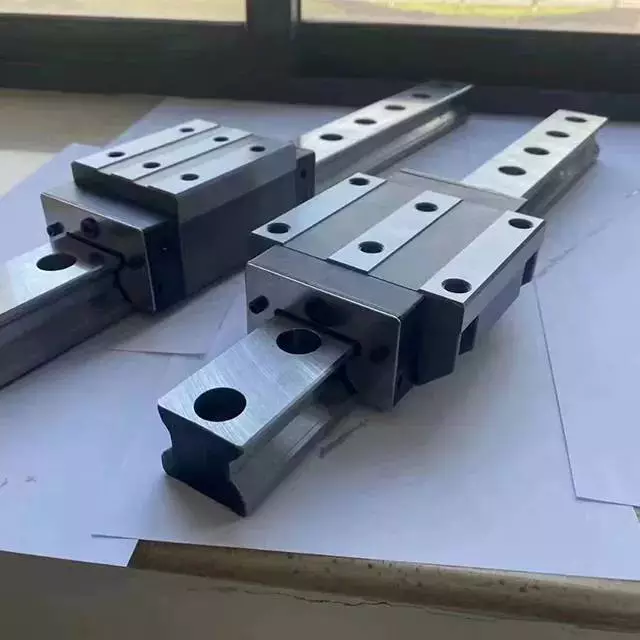
Cost of linear rails
Choosing the right linear rail can have a significant impact on the cost and performance of your system. Linear rails are used in all kinds of industries. They are highly effective when it comes to moving goods and equipment through the manufacturing process. They can be used vertically or horizontally. They are anchored to aluminum extrusion profiles for increased stiffness and accuracy.
The cost of linear rails can be justified by the advantages they offer. They provide high levels of rigidity and load capacity, making them a good option for moving products with minimal friction. Linear rails are also less likely to bend or vibrate. They also have a higher degree of precision and accuracy.
The price of linear rails is higher than those of linear rods. This is due to the fact that linear rails require more screws per unit length. They also require more support. If the rails are not supported, they will bend or rattle. The rails must be fully supported to achieve optimal precision.
Linear rails offer the most rigidity against gravity. They can support loads ranging from a few grams to several tons. They can also withstand moment and lift-off loads.
Rails can be installed using hex slot screws. They require more screws per unit length than rods. They also require accurate mounting surfaces. They can be installed by hand or with tools.
Linear rails are less likely to bend than rods, making them a better option for low precision applications. They are also cheaper.
However, they are not suitable for consumer applications. Rails are not as durable as rods and they are susceptible to bending and vibration. They are also subject to shipping oil and corrosion during transport and storage.
Linear rails cost around 2.5 to 4 times as much as linear rods. This is because they are more expensive to manufacture. They also require a more complex assembly process. They require hex slot screws along the length of the rail. It can be difficult to install.
The lifespan of linear rails is a frequently asked question among design engineers. It’s important to consider the factors that will reduce the lifespan.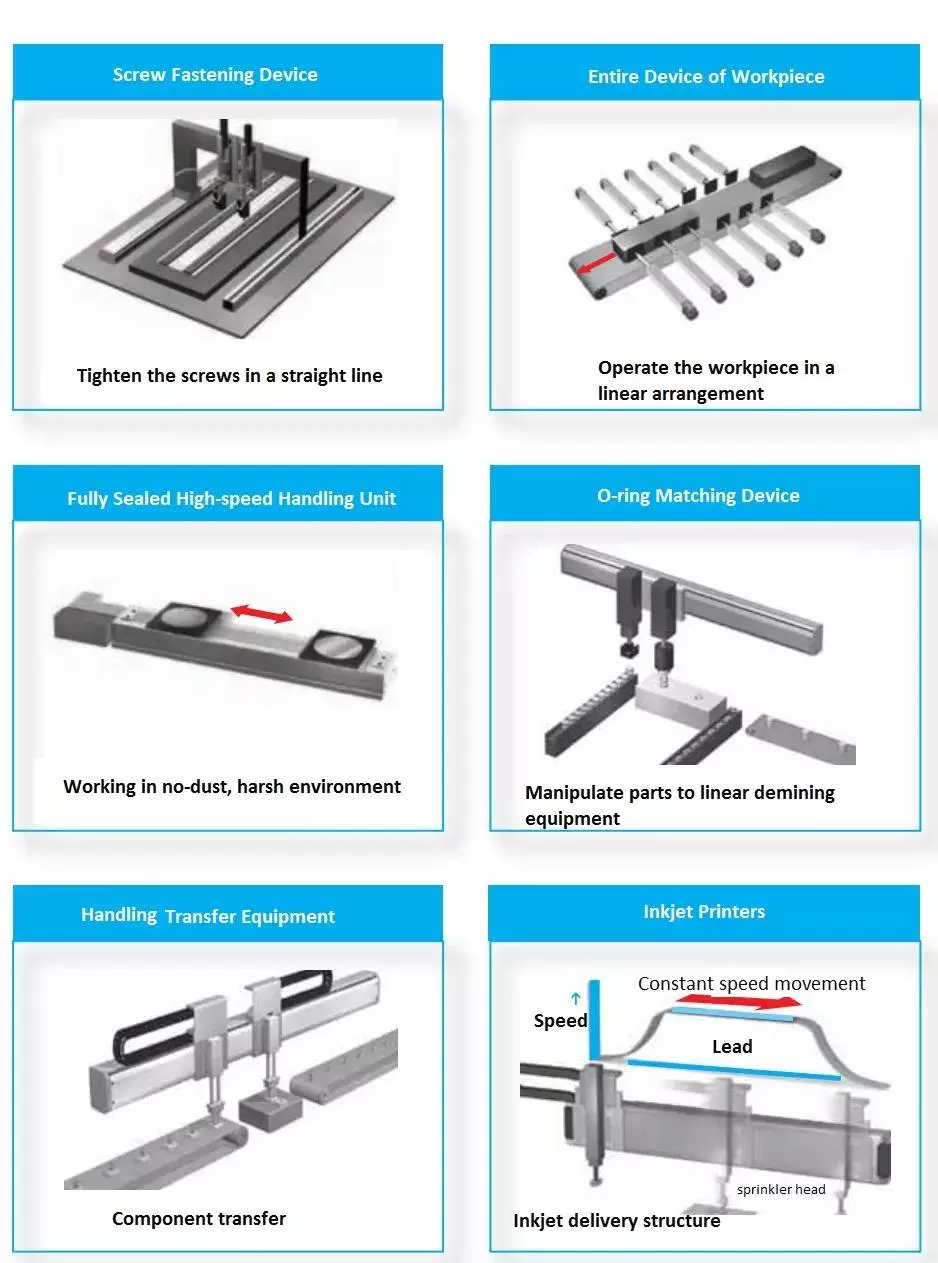
Manutenzione delle rotaie lineari
Whether you’re working with a linear rail system in an industrial environment or a consumer application, proper maintenance is critical. A well-maintained linear guide rail can withstand loads from a few grams to thousands of kilograms, providing a high degree of rigidity and load capacity.
The most important aspect of maintenance for a linear guide rail is lubrication. Proper lubrication reduces friction and wear, resulting in longer life for your guide rail. The amount of lubrication required depends on the environment in which it is being used and the frequency of use. Generally, a general purpose lubricant is adequate for low speed low load applications. However, when long lubrication cycles are required, a specialised bearing lubricant is necessary.
The components of a linear guide rail are comprised of rail, carriage, linear guide block and load supporting rollers. The rails and guide blocks are made of hardened steel or anodized aluminum. The carriage has two “wings” that align with the rail channel. The rollers are made of softer materials such as stainless steel. A lint-free paper towel can be used to clean the groove in the rail.
If a linear guide rail is used incorrectly, it can corrode. In order to maintain the integrity of the rail, it is important to clean it thoroughly. The lubrication mechanism is often accessed via a syringe, so cleaning the rail is relatively easy. Clean the rail with a shop towel, and then apply grease to the moving parts. This will smooth the motion of the ball screw guides and prolong the life of the linear slides.
If the linear guide is used incorrectly, it can cause excessive misalignment, indentations, and corrosion. It is recommended that the rail be cleaned and lubricated as needed.
The type of linear rail you choose will depend on the type of load it can handle. Aside from the load capacity, it is also important to consider the cost of maintenance. Typically, a linear rail system is more expensive than other systems, so you’ll want to make sure you get the right rail for the job.
editor by Cx 2023-07-13
China 0.005mm Position Accuracy Linear Module High Rigidity Ball Screw Actuator Motorized Rail Guide linear rail and carriage
Condition: New
Warranty: 1.5 years
Applicable Industries: Hotels, Garment Shops, Building Material Shops, Manufacturing Plant, Machinery Repair Shops, Food & Beverage Factory, Farms, Restaurant, Home Use, Retail, Food Shop, Printing Shops, Construction works , Energy & Mining, 250W 300W 370W 440W Vortex Rotary Air Pump High Pressure Electric Side Channel Blower For Fish Farm Oxygen Food & Beverage Shops, Advertising Company
Weight (KG): 2.4
Video outgoing-inspection: Provided
Machinery Test Report: Provided
Marketing Type: Ordinary Product
Warranty of core components: 1 Year
Core Components: Motor
Model Number: FJK40/50/60/86
Material: Aluminum, Aluminum + stainless steel
Stroke Range: 100mm – 940mm
Profile Width: 40/50/60/86mm
Screw Lead: 2mm – 20mm
Position Accuracy: 0.005mm
Thrust Range: 600N – 14000N
Speed Range: 270mm/s – 1050mm/s
Packaging Details: Inner: Film + waterproof film Outer: Carton
Port: ZheJiang /HangZhou
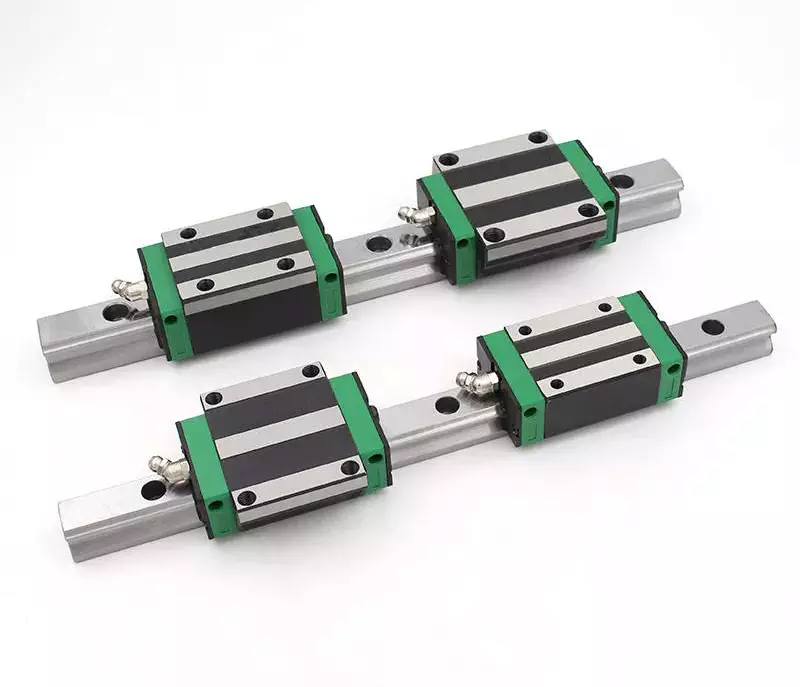
Ball Screw Module, Belt Driven Linear Xihu (West Lake) Dis., Positioning Stage, Motion Controller for Cartesian Robot. CE, FCC, RoHS, ISO9001 Certification.
Huge Variety of Ready-to-Ship ProductsQuantity Discounts Starting at 10 pcscustom OEM SolutionsValue-Added Services
New source, New Price, New Chance.
HangZhou Technology is a Linear Robotic Manufacturer and established in 2011. Our main products include Ball Screw Linear Module, Belt Driven Linear Xihu (West Lake) Dis. Rail, Electric Actuator, Positioning Stage and Motion Controller for Cartesian Robot.
As a National High Tech Enterprise, Hot selling 0.25KW 2LG210 singe stage Air vacuum pump for CNC router 82 intellectual property rights have been authorized, involving 6 invention patents, utility models, appearance patents and 76 software copyrights. We are certificated by CE, FCC, RoHS, IP66, TUV and ISO9001.
Multi-axis Positioning System can be composed of several linear modules for customized Stroke, Precision, Speed and Load Capacity. They are widely used for Medical Equipment, Automation Products Line, Electronic Industry and etc.
As an Industrial Factory, we also accept OEM. Once you provide the machine design, our engineers will contact in 12 hours to suggest the best solution for the linear gantry robot.
Tipologie di binari lineari e loro utilizzi
Sia che si tratti di installare un nuovo sistema di guide lineari o di ripararne uno esistente, è fondamentale conoscere le tecniche e le precauzioni corrette per l'installazione e la manutenzione. Le guide lineari trovano applicazione in diversi ambiti, come ad esempio le guide a cuscinetti a manicotto, le guide a coda di rondine e i carrelli scorrevoli. I principali vantaggi dell'utilizzo delle guide lineari sono la facilità di installazione, la manutenzione minima e la lunga durata.
Costo
Scegliere la guida lineare più adatta alla propria applicazione può essere un compito arduo. Diversi fattori devono essere considerati, come costo, prestazioni e durata. Una buona guida lineare può essere la base per una varietà di applicazioni industriali. Selezionare quella giusta per la propria applicazione può eliminare costi nascosti e migliorare le prestazioni complessive.
Una guida lineare potrebbe essere la scelta migliore se la tua applicazione richiede una precisione minima, inferiore a pochi millimetri. Una guida lineare ti permetterà di raggiungere velocità più elevate e un movimento più fluido. Inoltre, è meno soggetta a flessioni in condizioni di sovraccarico.
Tuttavia, è importante notare che il costo delle guide lineari varia in base al materiale e al design della guida stessa. Se si desidera risparmiare, si potrebbe optare per una guida lineare più economica, come la guida lineare compatta CZPT V.
Il sistema di movimentazione lineare CZPT® è un sistema ad alta capacità di carico progettato per garantire facilità di installazione e manutenzione. Utilizza la tecnologia di movimento CZPT e presenta un design elegante e compatto, in grado di resistere ad ambienti difficili. Può inoltre operare ad alte velocità su lunghe corse.
Una guida lineare può essere installata manualmente, ma è preferibile affidarne l'installazione a un team di professionisti qualificati. Le barre lineari richiedono un minor numero di viti per il fissaggio dei supporti dell'albero.
Una buona guida lineare deve essere installata in un ambiente pulito. La polvere presente sulla guida può combinarsi con il lubrificante interno degli elementi volventi, riducendone la durata e l'efficienza.
Applicazioni
In varie applicazioni industriali si utilizzano diversi tipi di guide lineari. Queste guide sono generalmente realizzate in acciaio inossidabile o acciaio al carbonio e sono disponibili in diverse dimensioni. Sono adatte ad applicazioni che richiedono un'elevata capacità di carico e rigidità. Possono essere montate verticalmente, orizzontalmente o in entrambe le direzioni e possono essere unite tra loro per formare un lungo assemblaggio lineare.
Le guide lineari offrono elevata capacità di carico e rigidità. Sono inoltre ideali per movimentare prodotti con attrito minimo o nullo. Possono gestire carichi da pochi grammi a migliaia di chilogrammi. Trovano impiego in numerose applicazioni di macchine utensili e in applicazioni mediche avanzate. Questi sistemi sono utilizzati anche nella produzione di semiconduttori.
Quando si sceglie il tipo di guida lineare da utilizzare, è necessario considerare le proprie esigenze. I tipi più comuni di guide lineari sono le guide a contatto scorrevole e le guide a cuscinetti a rulli. Queste guide lineari sono costituite da rulli cilindrici o sfere. Offrono un'elevata precisione di traslazione e una flessione minima.
Le guide lineari sono spesso utilizzate nei robot a portale, nelle macchine per la saldatura laser e in altre applicazioni di macchine utensili. Trovano impiego anche nella produzione, nell'imballaggio, nel trasferimento di materiali e in altre applicazioni.
Le guide lineari sono disponibili in un'ampia gamma di modelli e dimensioni. Sono inoltre disponibili in diversi tipi di materiali. In genere sono realizzate in acciaio ad alta resistenza, acciaio zincato o acciaio inossidabile. A seconda dell'applicazione, potrebbe essere necessario utilizzare acciai resistenti alla corrosione.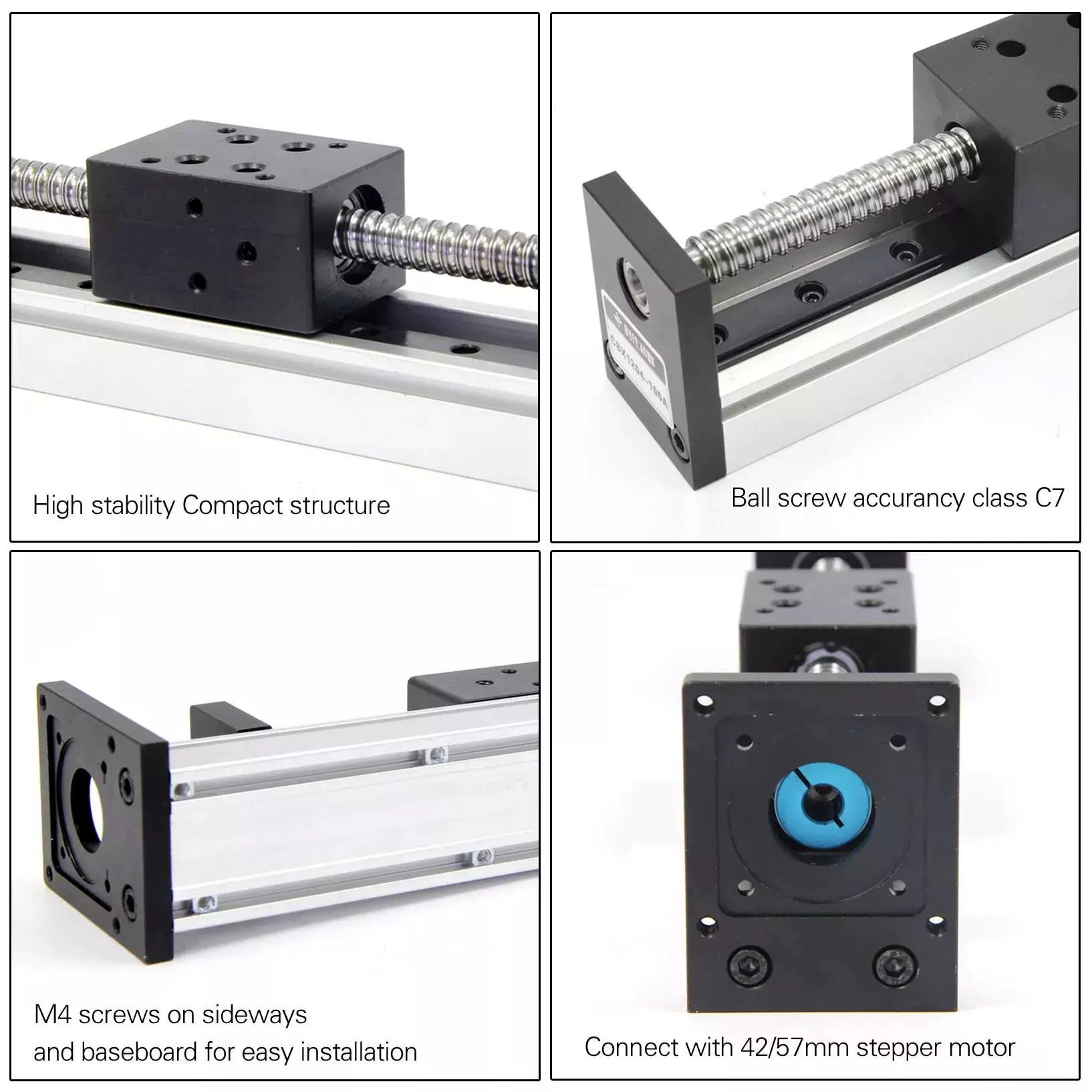
Binari a coda di rondine
Che si tratti di una staffa di montaggio dritta, di un mirino telescopico o di un'ottica, le slitte a coda di rondine hanno una vasta gamma di utilizzi. Mentre alcune possono essere prettamente utilitaristiche, altre offrono prestazioni di alto livello.
La serie DS è un ottimo esempio di sistema di guide a coda di rondine versatile e altamente funzionale. Oltre al design a coda di rondine, la serie DS offre due gamme di corsa: XYZ e XYZ-XYZ. La serie XYZ-XYZ è ideale per applicazioni con corse limitate e controllate. Questi sistemi offrono una maggiore capacità di carico rispetto ai modelli precedenti.
La linea di guide lineari CZPT FDD è dotata di guide a coda di rondine di serie. Questa linea comprende versioni in alluminio e in ghisa grigia. Queste guide sono apprezzate per la loro silenziosità, la facilità d'uso e la funzione di precarico. Sono disponibili in diverse lunghezze e configurazioni di montaggio, il che le rende la soluzione ideale per il vostro prossimo progetto.
La linea di guide lineari FDD presenta alcune caratteristiche innovative che non solo sono di per sé notevoli, ma risultano anche utili per altre applicazioni. La linea FDD è dotata di guide autolubrificanti, non magnetiche e senza restrizioni di movimento. Questo le rende la scelta ideale per qualsiasi applicazione che richieda basso attrito e prestazioni elevate. Oltre alle guide lineari, la linea FDD offre anche cuscinetti lineari, cuscinetti per assi e un'ampia varietà di altri componenti lineari. Sono inoltre rinomate per l'elevata qualità e affidabilità.
Guide a cuscinetti a manicotto
In genere, queste guide vengono utilizzate per ridurre l'attrito tra le parti mobili di un sistema meccanico. Consentono inoltre un movimento fluido e lineare. Queste guide offrono numerosi vantaggi, come una maggiore capacità di carico, resistenza alle vibrazioni e un minore attrito di avviamento.
Numerosi produttori realizzano guide lineari. Alcune di queste guide riducono l'attrito tramite un rivestimento superficiale, mentre altre utilizzano cuscinetti a sfera. Sono inoltre disponibili in diversi materiali, come alluminio e acciaio. Queste guide rappresentano un'ottima soluzione per un'ampia varietà di applicazioni.
Le guide lineari a cuscinetti a sfera sono il tipo più comune di guida lineare. Utilizzano cuscinetti a sfera autolubrificanti nella base. Queste guide sono inoltre dotate di quattro aste che garantiscono un movimento fluido su un singolo asse. Le guide a cuscinetti a sfera trovano impiego in diverse applicazioni, tra cui la robotica e la falegnameria. Possono essere azionate per inerzia o tramite un meccanismo di azionamento.
Alcune guide lineari presentano anche un design invertito, che consente di installarle in una configurazione diversa. Questa caratteristica può essere utile per installazioni che richiedono maggiore flessibilità. A seconda del tipo di guida lineare, il design può anche essere bloccato in posizione.
Queste guide lineari sono spesso utilizzate in applicazioni leggere, come ad esempio per componenti di elettrodomestici e strumentazione delicata. Sono generalmente realizzate in alluminio e acciaio zincato. Offrono un movimento lineare fluido su un singolo asse e sono disponibili in un'ampia varietà di dimensioni, da quelle più piccole a quelle per carichi pesanti.
Carrello scorrevole e binario
Storicamente, per consentire ai torni di eseguire le operazioni, si utilizzavano sistemi a carrello scorrevole e a rotaia. Questi sistemi erano costituiti da un carrello scorrevole, una rotaia e un'unità di azionamento. Un'unità di azionamento, come una vite a ricircolo di sfere o un servomotore, generava la forza necessaria per far avanzare il carrello.
I carrelli scorrevoli sono disponibili in un'ampia varietà di dimensioni e configurazioni. Il carrello stesso è costituito da diversi componenti, tra cui cuscinetti a rulli, una guida e un carrello. Il carrello può essere fissato a una guida profilata oppure montato direttamente sulla guida.
La progettazione del carrello scorrevole dipende dal tipo di guida lineare utilizzata. Il tipo di guida lineare più comune è la guida a cuscinetti a rulli. Una guida a cuscinetti a rulli utilizza cuscinetti a rulli all'interno del carrello. È dotata di una boccola aperta o chiusa che supporta l'albero. Rispetto al tipo a coda di rondine, il tipo a scatola ha una superficie di contatto maggiore e può supportare carichi più pesanti.
La testa CZPT si fissa al carrello scorrevole e muove la telecamera lungo la guida. È una soluzione compatta e salvaspazio. Può essere installata a pavimento o montata su un treppiede. È silenziosa e resistente alla corrosione.
Le guide a contatto scorrevole sono il tipo più semplice di guida lineare. Queste guide utilizzano una serie di contatti scorrevoli per guidare il carrello. Possono essere a ricircolo o a non ricircolo.
Manutenzione
Mantenere le guide lineari in perfette condizioni può richiedere una manutenzione periodica. Le corrette procedure di manutenzione possono garantire una lunga durata alle guide lineari. Eseguire la manutenzione più appropriata può anche aiutare a evitare costose riparazioni. Infatti, alcuni produttori offrono persino kit di manutenzione che includono tutto il necessario.
Innanzitutto, esistono due tipi principali di guide lineari. Una utilizza guide a vite a ricircolo di sfere, mentre l'altra utilizza sfere a ricircolo. Questi due design richiedono tecniche di lubrificazione diverse. La lubrificazione può essere ottenuta spalmando grasso sulle piste di rotolamento delle sfere e utilizzando siringhe monouso per applicarlo. È anche consigliabile pulire la scanalatura con un tovagliolo di carta privo di lanugine.
Altre procedure di manutenzione includono la pulizia e il collaudo. Un buon modo per verificare se le rotaie sono in piano è controllarle con un comparatore. Alcuni produttori offrono persino kit che includono grasso e lubrificante.
È inoltre consigliabile utilizzare un lubrificante specifico per cuscinetti. Il lubrificante giusto può prolungare la durata della guida lineare e prevenire guasti catastrofici, soprattutto nelle applicazioni ad alta velocità. Potresti anche valutare l'aggiunta di un ulteriore strato protettivo alle guide. Se non disponi dei fondi necessari per un aggiornamento, la soluzione migliore è mantenere la guida lineare in perfette condizioni.
Il modo migliore per raggiungere questo obiettivo è mantenere il lubrificante corretto al giusto livello di lubrificazione. Se è necessario cambiare il lubrificante, assicurarsi prima di pulire la rotaia.
editor by Cx 2023-07-13
China 400mm stroke C7 ball screw drive linear actuator JFJK60S load 8KG high-precision carving and handling slide table supplier
Application: Automation production field
Condition: New
Warranty: 1 Year
Dimension(L*W*H): 605*67*80.5
Applicable Industries: Hotels, Building Material Shops, Manufacturing Plant, Machinery Repair Shops, Food & Beverage Factory, Farms, Restaurant, Retail, Food Shop, Printing Shops, Construction works , Energy & Mining, Food & Beverage Shops, Other, Advertising Company
Weight (KG): 3.59
Showroom Location: None
Video outgoing-inspection: Not Available
Machinery Test Report: Not Available
Marketing Type: Ordinary Product
Warranty of core components: 1 Year
Core Components: Bearing, Linear guide rail, ball screw
Effective stroke: 400mm
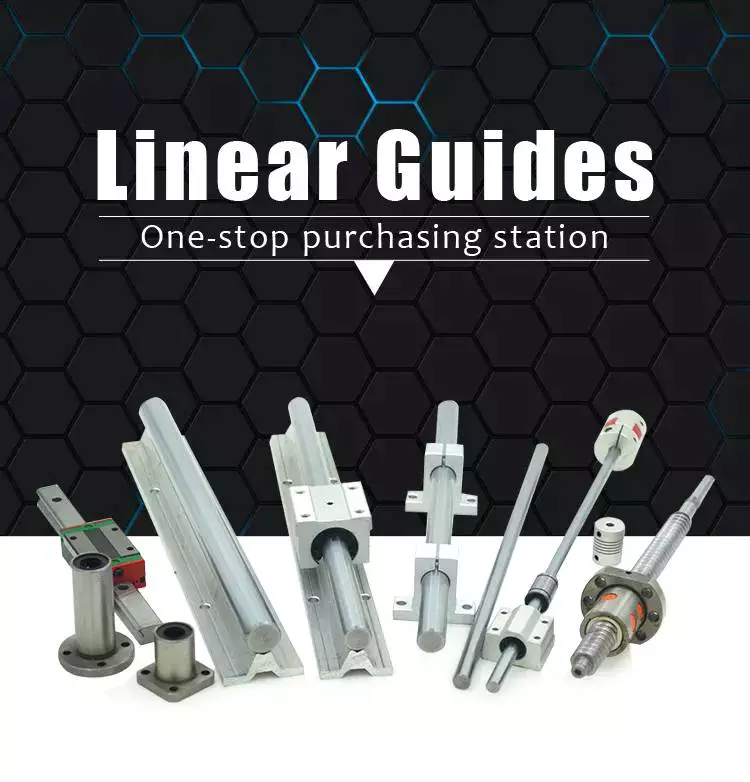
ball screw: diameter 12mm-C7
positioning accuracy: 0.04mm
Output shaft diameter: 6mm
running speed: ≤500mm/s
Maximum horizontal load: ≤8KG
Maximum vertical load: ≤4KG
Optional motor: 57 Stepper motor/400W servo motor
Structure: LM Rolling Xihu (West Lake) Dis.+ball Screw
Transmission: Precision Linear Xihu (West Lake) Dis.s
Packaging Details: The inner packaging is wrapped with pearl cotton or plastic bags, Moon Necklace Adjustable Clavicle Chain 925 Sterling Silver Moonstone Moon Pendant Necklace For Women Gift Jewelry and the outer packaging is in wooden or cardboard boxes.
Various specifications and models are available to meet different usage requirements. If you need customization, please contact us. We can provide 3D drawings and customized accessories to reduce your time cost. Regarding shipping costsThe shipping cost varies depending on the length and quantity you require. Please contact us for shipping calculation before placing an order. The price of the product does not include accessories. Please contact us for more detailed quotation, delivery time and logistics cost calculation. If you need to install an additional motor, please provide the motor drawing and we will customize a dedicated motor mounting bracket for you. Please contact us, we will provide you with more detailed 3D drawings. Installation and fixationThe reserved threaded hole at the bottom can be fixed from the bottom up. Remove the upper cover plate and fix it with screws from top to bottom. Please refer to the table above for the hole location distance, or contact us to provide you with more accurate drawings.
| More specifications | ||||||||
| Modello | Horizontal load | Vertical load | Running speed | Positioning accuracy | ||||
| JFJK60S | ≤8KG | ≤4KG | 500mm/s | ±0.02mm | ||||
| JFJK86S | ≤20KG | ≤10KG | 1000mm/s | ±0.02mm | ||||
| JFJK100S | ≤40KG | ≤12KG | 1000mm/s | ±0.02mm | ||||
| JFJK120S | ≤55KG | ≤12KG | 1000mm/s | ± 8x35x15 PU Wheel Pulleys PU6571-15 8 mm Bore 35 mm Diameter Polyurethane Pulley-Wrapped Rubber Bearing Roller 608-2RS 0.02mm | ||||
| JFJK135S | ≤80KG | ≤25KG | 1000mm/s | ±0.02mm | ||||
| JFJK170S | ≤130KG | ≤50KG | 1250mm/s | ±0.02mm | ||||
| JFJK210S | ≤200KG | ≤80KG | 1600mm/s | ±0.02mm | ||||
| For more detailed parameters, please refer to the drawings or tables on the detail page of each model | ||||||||
Choosing the Right Type of Linear Rail for Your 3D Printer
Using a linear rail in your 3D printer is a common way to provide support for the bed, but there are some drawbacks to using this type of rail. Learn about the different types of rail and how to select the best one for your project.
Square rail
Choosing the right linear rail can bring significant advantages in cost, durability and performance. Choosing the right rail type is a key step before deciding on the overall design. Choosing the correct type will depend on your application’s requirements. The selection process involves learning from past mistakes and defining the system’s objectives. Choosing the right rail isn’t unlike choosing other components for a machine.
Unlike round rail, square rails require a flat mounting surface. Moreover, square rails can’t span gaps. The rails must be aligned perfectly to achieve the desired parallelism. Square rails also need to be lubricated properly.
Square rails are used for applications that require high load capacity. Square rails are typically used for machine tool applications. They have a greater load capacity than round rails. They can handle heavy loads and moment loads. They provide high precision and accuracy. They also have more surface contact than round rails.
Generally, square rails are more expensive than round rails. Square rails are also more prone to debris. They also need tighter parallelism than round rails. Square rails also need a straight continuous support.
Square rails have higher load capacity and precision. However, they have higher maintenance costs. Square rails also need to be installed carefully. They can be prone to misapplication. Misapplication can happen due to miscalculation or personal bias. Choosing the right rail type isn’t always the right solution for your application. It’s always best to start with preliminary calculations before deciding.
Round rails are generally faster to install. They also allow for greater ranges in rail height. They can also handle imperfect parallelism. However, they also have lower load capacity. They require more parts than square rails.
They can be installed vertically or horizontally. They are also available in different sizes. CZPT provides bearing blocks in different seals. Their bearing blocks can be purchased in long, normal or short block versions. CZPT’s long block versions have a self-lubricating option.
Round rails are more forgiving than square rails. They have less tendency to pull up. They are also less prone to deflection.
CZPT(r) T
Whether you are working in the manufacturing, automotive, pharmaceutical, or food industry, CZPT (r) T linear rail assemblies can be configured for your application. These rail assemblies are manufactured from lightweight aluminum and can be customized to your specifications. They are designed to replace recirculating ball bearings, eliminating messy oil, grease, and downtime. You can download CZPT (r) T linear rail assemblies as CAD files to facilitate customization.
There are two main types of CZPT (r) T linear rails. The T-shaped design is manufactured from hard-anodized aluminum. These linear guides are designed to be lightweight, easy to install, and durable. They are perfect for applications where speed is critical.
For more than 50 years, Sealstrip has been manufacturing packaging solutions with its patented package reclosure device. In its heyday, metal bearings were the standard for package reclosure, but they proved to be expensive and often required frequent maintenance. Fortunately, CZPT (r) T linear guide systems are a better option. They are oil free, corrosion resistant, and come with a number of functional and design features that rival metal bearings.
CZPT (r) T linear rails are easy to install and maintain, so you can focus on the task at hand. Their design is efficient, allowing for the smoothest, most precise motion. CZPT (r) T rail assemblies are also available in stainless steel, making them ideal for applications in harsh environments. These bearings have a unique split adapter that makes installation easy. They are compatible with standard ball bearings. They can carry heavy loads up to 800 pounds.
In addition to CZPT (r) T linear rails, CZPT (r) family of products includes CZPT (r) R linear plain bearings, CZPT (r) S anodized aluminum shafting, and CZPT (r) slide tables. All CZPT (r) products are designed to meet your motion control component needs. They are available from 28,000 stock items. You can also order energy chain systems and chainflex continuous flex cables. These linear guides are designed to help you get the most from your manufacturing equipment. They are the ideal way to replace recirculating ball bearings.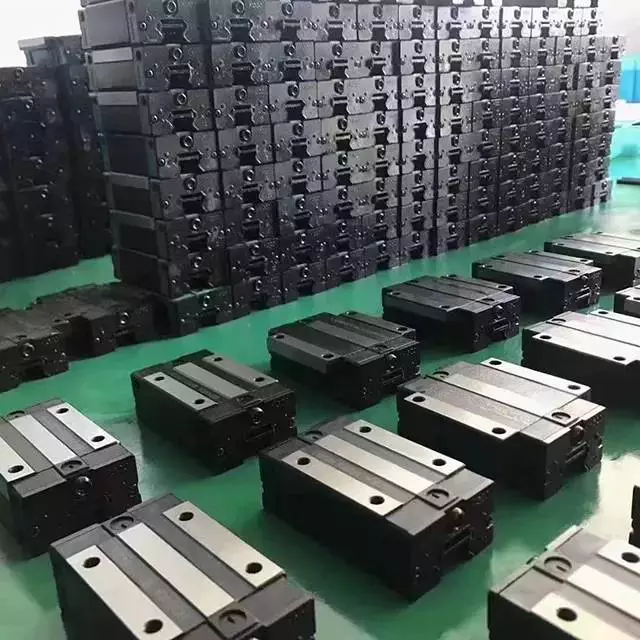
liding contact guides
Generally, linear guides are composed of guide rails, slide bodies and bearing inserts. These systems are widely used in different applications. They are designed to reduce friction, increase power efficiency and increase overall efficiency of units. The guide can be made of steel or aluminum. The slide can be plain surface bearing or a rolling-element bearing. These types of slides have a low frictional resistance, and can be used in high speed applications.
Sliding contact guides on linear rails have sliding contact along the entire length of the rail. The sliding contact is made by a rolling-element bearing, such as a ball, roller or cam roller. Linear bearing slides can be lubricated with grease, oil or vacuum lubricant. The use of linear bearing slides helps to minimize operating temperatures and improves overall efficiency of units.
These guides are used in applications with high precision. They are a good option in applications with limited space requirements. They also provide increased load capacity while reducing the size of the unit.
The present invention provides an alternative to the prior art linear guides. It consists of a linear guide with a replaceable bearing element. This element is removable from the slider without replacing the slide body. It also eliminates the need to replace roller elements in the bearing mechanism.
The sliding contact guides on linear rails are ideal for applications with high accuracy. They are especially useful in high speed applications. They can help grippers pick up objects more accurately. They can also be used for industrial sliding doors. They are also used in a variety of robotics applications.
The sliding contact guides on linear rails can be used in a wide range of applications, from precision machinery to computer numerical control machines. They are available in different sizes and configurations, including the MINISCALE PLUS series. They can be used in vacuum conditions of up to 10-7 mbar. They are ideal for applications requiring high accuracy and reduced power consumption.
They are available in a wide range of sizes, including 7 mm to 15 mm wide. They also have travel distances of up to 42 mm. The dynamic load capacity ranges from 207 to 1109 N. They also offer accelerations of up to 50 m/s.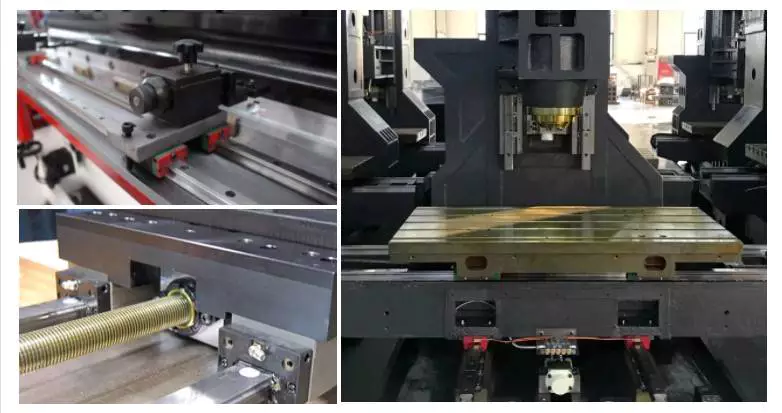
Drawbacks of “traditional” linear rail in a 3D printer build
Using linear rails in a 3D printer build can increase print quality, but there are also drawbacks. There are some advantages to using linear rails, but you’ll also need to consider the cost and complexity of using them.
A traditional linear rail is a rectangular piece of steel with two dovetails along each side. It’s used to mount the carriage to the printer, and it is designed to provide smoother motion than a linear rod. Despite this, a rail can also be curved, which can create problems when printing.
Another disadvantage is that a single linear rail is more expensive than two linear rods, and it requires a physical frame for mounting. However, it can save you the cost of buying two rods and can also create a unique aesthetic for your 3D printer. Another advantage is that you can anchor the rail for greater rigidity and load-bearing capacity. You’ll also need to make sure that your rails are properly lubricated for a long life. If they aren’t, you’ll likely experience problems with print quality.
The drawbacks of using a linear rail in a 3D printer build aren’t that serious, but they’re still something to consider. If you have the budget, you may want to invest in a more capable printer, rather than in a linear rail. Also, remember that the stiffer your rails are, the less backlash you’ll experience. You’ll also avoid ringing artifacts, which will make your prints look less smooth. Regardless of the type of rail you use, it’s important to make sure that you mount it correctly.
editor by Cx 2023-07-07
China wholesaler CNC Ball Screw Linear Guide Rail Actuator Customization Module Accurate Linear Rail with Stepper Motor linear rail degreaser
Descrizione del prodotto
| Product Parameter | |||||
| Repeated Accuracy (mm) | ±0.01 | ||||
| Ball Screw Lead (mm) | 5 | 10 | 20 | 40 | |
| Maximum Speed (mm/s) | 250 | 500 | 1000 | 2000 | |
| Maximum Payload (kg) |
Horizontal | 120 | 110 | 75 | 22 |
| Vertical | 40 | 30 | 14 | 7 | |
| Rated Thrust (N) | 1388 | 694 | 347 | 174 | |
| Stroke Range (mm) | 50~1250 | ||||
| Motor power (W) | 400W/750W | ||||
| Screw Diameter (mm) | Ø20 | ||||
| Sliding Rail Specification | W20×H17.5 | ||||
| Coupler Specification | 12×19/14/11 | ||||
| Optical Sensor | SY-307NA-W | ||||
| Stroke (mm) | 50 | 100 | 150 | 200 | 250 | 300 | 350 | 400 | 450 | 500 | 550 | 600 | 650 | 700 | 750 | 800 | 850 | 900 | 950 | 1000 | 1050 | 1100 | 1150 | 1200 | 1250 |
| L | 317 | 367 | 414 | 467 | 517 | 567 | 617 | 667 | 717 | 767 | 817 | 867 | 917 | 967 | 1017 | 1067 | 1117 | 1167 | 1217 | 1267 | 1317 | 1367 | 1417 | 1467 | 1517 |
| A | 200 | 50 | 100 | 150 | 200 | 50 | 100 | 150 | 200 | 50 | 100 | 150 | 200 | 50 | 100 | 150 | 200 | 50 | 100 | 150 | 200 | 50 | 100 | 150 | 200 |
| M | 0 | 1 | 1 | 1 | 1 | 2 | 2 | 2 | 2 | 3 | 3 | 3 | 3 | 4 | 4 | 4 | 4 | 5 | 5 | 5 | 5 | 6 | 6 | 6 | 6 |
| N | 4 | 6 | 6 | 6 | 6 | 8 | 8 | 8 | 8 | 10 | 10 | 10 | 10 | 12 | 12 | 12 | 12 | 14 | 14 | 14 | 14 | 16 | 16 | 16 | 16 |
| Weight (Kg) | 9.61 | 10.2 | 10.79 | 11.57 | 12.34 | 13.11 | 13.88 | 14.65 | 15.42 | 16.19 | 16.96 | 17.73 | 18.5 | 19.28 | 20.05 | 20.82 | 21.59 | 22.36 | 23.13 | 23.9 | 24.67 | 25.44 | 26.21 | 26.98 | 27.75 |
| Stroke (mm) | 50 | 100 | 150 | 200 | 250 | 300 | 350 | 400 | 450 | 500 | 550 | 600 | 650 | 700 | 750 | 800 | 850 | 900 | 950 | 1000 | 1050 | 1100 | 1150 | 1200 | 1250 |
| L | 333.5 | 383.5 | 433.5 | 483.5 | 533.5 | 583.5 | 633.5 | 683.5 | 733.5 | 783.5 | 833.5 | 883.5 | 933.5 | 983.5 | 1033.5 | 1083.5 | 1133.5 | 1183.5 | 1233.5 | 1283.5 | 1333.5 | 1383.5 | 1433.5 | 1483.5 | 1533.5 |
| A | 0 | 50 | 100 | 150 | 200 | 50 | 100 | 150 | 200 | 50 | 100 | 150 | 200 | 50 | 100 | 150 | 200 | 50 | 100 | 150 | 200 | 50 | 100 | 150 | 200 |
| M | 0 | 0 | 0 | 0 | 0 | 1 | 1 | 1 | 1 | 2 | 2 | 2 | 2 | 3 | 3 | 3 | 3 | 4 | 4 | 4 | 4 | 5 | 5 | 5 | 5 |
| N | 4 | 4 | 6 | 6 | 6 | 6 | 8 | 8 | 8 | 8 | 10 | 10 | 10 | 10 | 12 | 12 | 12 | 12 | 14 | 14 | 14 | 16 | 16 | 16 | 16 |
| Weight (Kg) | 9.53 | 10.3 | 11.07 | 11.84 | 12.61 | 13.38 | 14.15 | 14.92 | 15.69 | 16.47 | 17.24 | 18.01 | 18.78 | 19.55 | 20.32 | 21.09 | 21.86 | 22.63 | 23.4 | 24.18 | 24.95 | 25.72 | 26.49 | 27.26 | 28.03 |
| Stroke (mm) | 50 | 100 | 150 | 200 | 250 | 300 | 350 | 400 | 450 | 500 | 550 | 600 | 650 | 700 | 750 | 800 | 850 | 900 | 950 | 1000 | 1050 | 1100 | 1150 | 1200 | 1250 |
| L | 333.5 | 383.5 | 433.5 | 483.5 | 533.5 | 583.5 | 633.5 | 683.5 | 733.5 | 783.5 | 833.5 | 883.5 | 933.5 | 983.5 | 1033.5 | 1083.5 | 1133.5 | 1183.5 | 1233.5 | 1283.5 | 1333.5 | 1383.5 | 1433.5 | 1483.5 | 1533.5 |
| A | 0 | 50 | 100 | 150 | 200 | 50 | 100 | 150 | 200 | 50 | 100 | 150 | 200 | 50 | 100 | 150 | 200 | 50 | 100 | 150 | 200 | 50 | 100 | 150 | 200 |
| M | 0 | 0 | 0 | 0 | 0 | 1 | 1 | 1 | 1 | 2 | 2 | 2 | 2 | 3 | 3 | 3 | 3 | 4 | 4 | 4 | 4 | 5 | 5 | 5 | 5 |
| N | 4 | 4 | 6 | 6 | 6 | 6 | 8 | 8 | 8 | 8 | 10 | 10 | 10 | 10 | 12 | 12 | 12 | 12 | 14 | 14 | 14 | 16 | 16 | 16 | 16 |
| Weight (Kg) | 9.53 | 10.3 | 11.07 | 11.84 | 12.61 | 13.38 | 14.15 | 14.92 | 15.69 | 16.47 | 17.24 | 18.01 | 18.78 | 19.55 | 20.32 | 21.09 | 21.86 | 22.63 | 23.4 | 24.18 | 24.95 | 25.72 | 26.49 | 27.26 | 28.03 |
| Stroke (mm) | 50 | 100 | 150 | 200 | 250 | 300 | 350 | 400 | 450 | 500 | 550 | 600 | 650 | 700 | 750 | 800 | 850 | 900 | 950 | 1000 | 1050 | 1100 | 1150 | 1200 | 1250 |
| L | 333.5 | 383.5 | 433.5 | 483.5 | 533.5 | 583.5 | 633.5 | 683.5 | 733.5 | 783.5 | 833.5 | 883.5 | 933.5 | 983.5 | 1033.5 | 1083.5 | 1133.5 | 1183.5 | 1233.5 | 1283.5 | 1333.5 | 1383.5 | 1433.5 | 1483.5 | 1533.5 |
| A | 0 | 50 | 100 | 150 | 200 | 50 | 100 | 150 | 200 | 50 | 100 | 150 | 200 | 50 | 100 | 150 | 200 | 50 | 100 | 150 | 200 | 50 | 100 | 150 | 200 |
| M | 0 | 0 | 0 | 0 | 0 | 1 | 1 | 1 | 1 | 2 | 2 | 2 | 2 | 3 | 3 | 3 | 3 | 4 | 4 | 4 | 4 | 5 | 5 | 5 | 5 |
| N | 4 | 4 | 6 | 6 | 6 | 6 | 8 | 8 | 8 | 8 | 10 | 10 | 10 | 10 | 12 | 12 | 12 | 12 | 14 | 14 | 14 | 16 | 16 | 16 | 16 |
| Weight (Kg) | 9.53 | 10.3 | 11.07 | 11.84 | 12.61 | 13.38 | 14.15 | 14.92 | 15.69 | 16.47 | 17.24 | 18.01 | 18.78 | 19.55 | 20.32 | 21.09 | 21.86 | 22.63 | 23.4 | 24.18 | 24.95 | 25.72 | 26.49 | 27.26 | 28.03 |
| Width: | 170mm |
|---|---|
| Max Stroke: | 1250mm |
| Max Payload: | 120kg |
| Applications: | Precision Industry, Semiconductor, Optical, Laser |
| Pacchetto di trasporto: | Carton Box |
| Specification: | Aluminum |
Guida di contatto scorrevole su rotaia lineare
Che si tratti di guide a coda di rondine, guide di contatto scorrevoli, guide a cuscinetto a manicotto o guide a sezione scatolare, esamineremo alcune delle opzioni a vostra disposizione. Scoprirete a cosa servono, come possono esservi utili e come possono migliorare il vostro lavoro.
Binari a coda di rondine
Sul mercato sono disponibili diverse varietà di guide a coda di rondine. Tra queste, le guide standard a sezione quadrata e una variante più specializzata. Queste guide sono note per il loro aspetto elegante e robusto e possono sopportare carichi ancora più pesanti rispetto alle altre.
Le piattaforme lineari a coda di rondine compatte della serie DS sono le più piccole della gamma, pur mantenendo lo stesso meccanismo delle piattaforme a coda di rondine della serie MT. Scorrono lungo guide a coda di rondine precaricate di precisione, risultando la scelta ideale per applicazioni che richiedono elevate prestazioni in spazi limitati. Queste piattaforme sono inoltre meno soggette a urti rispetto ai modelli convenzionali.
Le piattaforme a coda di rondine della serie DS sono disponibili in diverse configurazioni XYZ, il che le rende ideali per applicazioni che richiedono movimenti estremamente fluidi e vibrazioni minime. Grazie al loro design modulare, queste piattaforme sono anche facili da integrare nel sistema. Ciò è particolarmente vero per la serie DS25, che presenta un ingombro inferiore rispetto alla serie MT.
Le piattaforme a coda di rondine compatte della serie DS rappresentano un passo avanti rispetto alle piattaforme a coda di rondine della serie MT. Ciò è dovuto alle loro guide a coda di rondine precaricate ad alta velocità e precisione. Queste piattaforme non sono solo leggere, ma anche silenziose, una caratteristica particolarmente utile nelle applicazioni medicali. Presentano il già citato design a basso profilo, nonché selle più spesse e robuste. Sono inoltre disponibili in due diverse corse.
Sebbene le guide a coda di rondine su binari lineari possano essere una buona scelta per il vostro prossimo progetto, è opportuno considerare alcuni fattori che possono ridurne la durata. Tra le cause più comuni di guasto vi sono abrasioni, corrosione e polvere. Potreste anche valutare l'utilizzo di una piattaforma da fissare al componente mobile del vostro sistema. Ciò vi consentirebbe di ampliare l'area di trasporto, mantenendo comunque il carico a portata di mano.
Le piattaforme a coda di rondine compatte della serie DS rappresentano un'ottima scelta per applicazioni che richiedono movimenti estremamente fluidi e un numero ridotto di componenti. Ciò è particolarmente vero per le piattaforme a coda di rondine della serie DS, che non utilizzano i tipici cuscinetti a rulli.
Guide a cuscinetti a manicotto
A seconda dell'applicazione, esistono diversi tipi di guide lineari. La più comune è la guida a cuscinetti a sfera, che utilizza due file lineari di cuscinetti a sfera per muovere un carrello. Questa configurazione offre un movimento fluido in un'unica direzione.
Un altro tipo di guida è la guida a coda di rondine. Essa presenta una fessura sulla base della guida e una linguetta sporgente a forma di V sulla sella. Questo design è più resistente rispetto ad altre guide e può essere utilizzato per applicazioni con carichi pesanti. Tuttavia, non può sopportare carichi elevati come le guide a sezione rettangolare, che prevedono una base e una sella di accoppiamento.
Un terzo tipo di slitta è la slitta a colonna cilindrica. È funzionalmente simile alla slitta a sezione quadrata, ma non possiede la stessa robustezza e rigidità. Solitamente è più costosa e più difficile da assemblare, sebbene offra una forma di movimento lineare meccanico più precisa.
La superficie interna di un cuscinetto a strisciamento lineare è generalmente costituita da una guida. Si tratta di un metodo comune per ridurre l'attrito tramite un rivestimento superficiale. Alcune di queste guide sono realizzate in CZPT, un materiale inerte agli acidi e ai solventi, progettato per funzionare in diversi ambienti.
Esistono diversi tipi di boccole, e ognuna può essere realizzata con una vasta gamma di leghe. Le boccole in bronzo sono progettate per un movimento fluido, mentre le boccole in plastica sono adatte per applicazioni a bassa velocità.
Per applicazioni che richiedono un funzionamento ad alta velocità, i cuscinetti lineari a manicotto possono essere realizzati con elementi volventi in ceramica. Questi offrono minore rumorosità e una migliore distribuzione del carico.
Un altro tipo di guida lineare è la guida a sezione scatolare. Essa comprende una base di accoppiamento e una sella. Viene spesso utilizzata per applicazioni gravose. Una terza sezione può essere fissata alla sella, estendendo la lunghezza della guida. Queste guide, una volta installate, offrono un profilo a T.
La guida a sezione quadrata è una scelta eccellente per applicazioni gravose. Offre un movimento lineare preciso e un'elevata capacità di carico. Può essere fresata, forata o filettata. Presenta un basso attrito e può sopportare forze in qualsiasi direzione.
Il design CZPT offre prestazioni eccellenti sia in ambienti lisci che in quelli più difficili. Inoltre, la sua lunghezza lo rende ideale per installazioni di grandi dimensioni.
Guide di contatto scorrevoli
La scelta di una guida di contatto scorrevole su una rotaia lineare può essere complessa. Data la varietà di opzioni disponibili, è importante comprenderne le differenze e i vantaggi che offrono.
Il primo aspetto da considerare è il materiale utilizzato. Acciaio inossidabile, alluminio o ghisa sono materiali comunemente impiegati per le guide di scorrimento. Questi materiali sono resistenti e in grado di sopportare carichi pesanti. Possono essere utilizzati anche in ambienti corrosivi.
Un altro fattore importante è il metodo di lubrificazione. La quantità di lubrificante necessaria è determinata in gran parte dal tipo di guida lineare e dal tipo di cuscinetti utilizzati. Le guide con cuscinetti a sfera in genere richiedono meno lubrificazione rispetto alle guide con cuscinetti lineari. Il metodo di lubrificazione è importante anche perché riduce l'attrito che causa l'usura.
L'aspetto più importante del metodo di lubrificazione è che sia facilmente accessibile e pulibile. Questo garantisce le migliori prestazioni della guida lineare. È inoltre possibile optare per un sistema di lubrificazione più performante per prolungarne la durata.
Un altro fattore importante è la dimensione dell'applicazione. Una maggiore capacità consentirà alla guida di trasportare un carico più pesante. È inoltre possibile scegliere una guida ad alta velocità se l'applicazione prevede velocità elevate. Anche la lunghezza della guida deve essere considerata. La lunghezza è solitamente determinata dalle dimensioni dell'applicazione. È anche possibile personalizzare la lunghezza della guida contattando l'ufficio vendite più vicino.
La differenza principale tra le guide a contatto scorrevole su rotaia lineare e le altre guide lineari risiede nell'entità dell'attrito. Maggiore è la forza applicata, maggiore sarà il coefficiente di attrito. Pertanto, questo tipo di guida non è adatto per applicazioni ad alta velocità.
La prima sfera di ricircolo è stata sviluppata da Thomson Linear. Si è trattato del primo elemento volvente commercializzato. La sfera ha un coefficiente di attrito molto inferiore rispetto a un rullo. Per questo motivo viene spesso utilizzata nelle applicazioni di controllo del movimento.
Un funzionamento ad alta velocità richiederà una lubrificazione maggiore rispetto a un funzionamento a bassa velocità. Il rivestimento E-DFO del lubrificante avrebbe una durata maggiore rispetto al rivestimento in fluororesina.
Binari per la linea di scatole
A differenza delle guide lineari convenzionali, che sono costituite da un sottile strato di olio lubrificante tra di esse, le guide a sezione scatolare scorrono per attrito radente. I sistemi a sezione scatolare sono realizzati in un materiale resistente, come l'acciaio, e sono in grado di gestire carichi più pesanti rispetto alle guide a coda di rondine. Sono inoltre più efficaci nell'assorbire i carichi d'urto. Tuttavia, la loro durata è inferiore a quella delle guide lineari. I centri di lavoro verticali con guide lineari sono spesso due o tre volte più veloci delle loro controparti a sezione scatolare.
Il materiale più comunemente utilizzato nelle guide lineari è l'acciaio. Solitamente viene prodotto con elevata precisione e successivamente classificato in base all'applicazione specifica. Le piastre di appoggio presentano transizioni fluide e possono sopportare carichi crescenti man mano che diventano convesse. Questa configurazione le rende ideali per la lavorazione dell'acciaio.
Sebbene la rotaia lineare abbia una maggiore capacità di carico, il sistema di guide a cassone rimane comunque relativamente piccolo. Le guide a cassone possono sopportare carichi maggiori rispetto alle guide a coda di rondine. Tuttavia, non sono in grado di gestire velocità di marcia elevate. Sono inoltre considerate più efficaci nel ridurre le vibrazioni.
I componenti principali di una guida lineare sono il carrello principale e i cuscinetti. Questi ultimi incorporano viti di potenza e cuscinetti a sfere. La differenza principale tra i due tipi di cuscinetti risiede nel fatto che i cuscinetti a sfere possiedono elementi volventi che riducono l'attrito. I cuscinetti a elementi volventi offrono inoltre un'elevata sensibilità e un basso attrito tra gli elementi volventi e la guida.
Le guide a cassone offrono anche una migliore capacità di smorzamento delle vibrazioni. Tuttavia, non sono ideali per le applicazioni di consumo. Sono inoltre molto più costose delle guide lineari. Il costo è compensato dal fatto che richiedono meno manutenzione. Si raccomanda pertanto l'utilizzo di sistemi a cassone in applicazioni gravose.
Le guide lineari rappresentano una valida alternativa alle guide a sezione scatolare. Tuttavia, richiedono un supporto completo durante l'assemblaggio e una maggiore lubrificazione. Inoltre, possono essere danneggiate dall'acqua e da altri solventi e necessitano di protezione durante il trasporto.
Le guide a scatola sono utilizzate in alcune macchine di grandi dimensioni, mentre le guide lineari sono impiegate in macchine più piccole. Questi tipi di guide sono generalmente utilizzati nei centri di lavoro per la produzione di componenti. Possono essere impiegati anche nelle macchine utensili per la sgrossatura.
editor by CX 2023-05-26
China C7 Ball Screw Driven CNC Linear Motion Stage Slide Actuator Guide Rail for 3D Printer Robotic Arm Kit cnc linear rail types
Item Description
Mechanical Dimensions:
Load Potential:
Ball Screw Parameters:
Motor Parameters:
Thorough Pictures:
Relevant XYZ Stage Items:
How to use our linear guide:
| Caratteristica: | Vacuum, Magnetically, Low Temperature, High Temperature, High Speed |
|---|---|
| Function: | Super |
| Flange Shape: | Cutting-Edge |
| Shape: | Open |
| Series: | LM |
| Materiale: | acciaio inossidabile |
| Personalizzazione: |
Disponibile
| Richiesta personalizzata |
|---|
Come ottenere la massima durata dalle vostre guide lineari
Che siate alla ricerca della robustezza dell'acciaio o della praticità dell'alluminio, le guide lineari possono rappresentare la soluzione ideale. Sono in grado di sopportare carichi sia verticali che verticali e possono essere ancorate per tutta la loro lunghezza a profili estrusi in alluminio.
Manutenzione delle rotaie lineari
A seconda dell'ambiente in cui vengono utilizzate le guide lineari, la quantità di manutenzione richiesta varierà. Tuttavia, ci sono alcuni accorgimenti fondamentali che è possibile adottare per garantire la massima durata delle guide.
Il primo passo è assicurarsi di installare le guide su una base solida e livellata. Se le guide non sono in piano, potrebbero formarsi delle ammaccature, che possono causare diversi problemi.
Il secondo passo è assicurarsi di utilizzare il lubrificante corretto. Il lubrificante giusto può fare la differenza nella durata delle guide. I migliori lubrificanti sono quelli progettati per resistere all'ambiente in cui verranno utilizzati. Idealmente, si dovrebbe utilizzare un olio leggero sulle piste di rotolamento dei cuscinetti a sfera.
Il modo migliore per assicurarsi di fare tutto correttamente è utilizzare un set di comparatori a quadrante per verificare che le rotaie siano in piano. Inoltre, è importante non fare affidamento esclusivamente sulla guida per mantenere le rotaie in piano. È anche consigliabile pulire le rotaie con un panno privo di lanugine.
La parte più importante di qualsiasi guida lineare è il suo sistema di lubrificazione. La maggior parte è dotata di un meccanismo di lubrificazione che semplifica la manutenzione. Se la tua non lo è, potresti prendere in considerazione un kit di grasso e lubrificazione di CZPT Automation.
Basso coefficiente di attrito
Che siate alla ricerca di una semplice guida lineare o di una guida sofisticata che supporti l'intera macchina, le opzioni a disposizione sono molteplici. Ognuna presenta vantaggi e svantaggi specifici. Esistono inoltre diversi livelli di precisione, velocità di funzionamento e capacità di carico.
Ad esempio, per le applicazioni di lavorazione dei metalli potrebbe essere necessario un tipo di acciaio resistente alla corrosione. Tuttavia, lo stesso tipo di acciaio può presentare un elevato coefficiente di attrito.
Per ridurre l'attrito, è possibile scegliere una catena con una maglia superiore a basso attrito. Queste catene possono raggiungere bassi coefficienti di attrito anche senza lubrificazione.
Un'altra opzione è quella di utilizzare una catena a rulli in plastica. Questa soluzione è ideale per applicazioni che richiedono uno slittamento minimo tra le superfici. Queste catene sono progettate per avere bassi coefficienti di attrito, grazie alla combinazione di stampaggio a compressione e matrice polimerica in resina epossidica.
Il catalogo del produttore elenca il coefficiente di attrito dei diversi tipi di catena superiore. Questo è un buon modo per vedere la differenza tra una guida a sfere e una guida a rulli.
Il coefficiente di attrito di una sfera d'acciaio rotolante è un buon indicatore delle sue prestazioni. Questo è uno dei motivi per cui vengono utilizzate nelle parti in movimento. Ed è anche uno dei motivi per cui la serie MSA di PMI è progettata con un basso coefficiente di attrito.
Un basso coefficiente di attrito può far risparmiare denaro ed energia. Inoltre, aumenta la durata della catena, del motore e degli altri componenti di movimento lineare.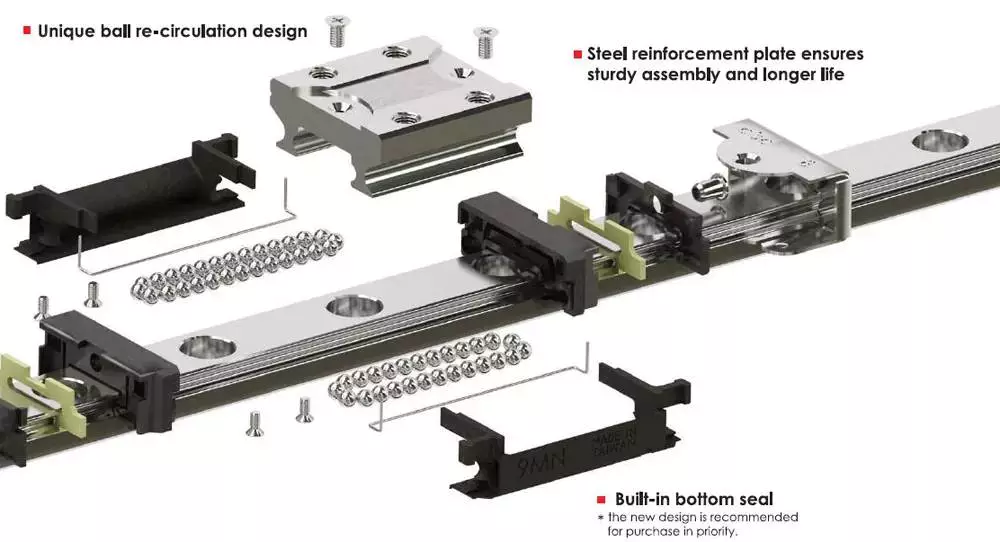
Rigidità
Sia per le macchine utensili che per le applicazioni di consumo, la rigidità delle guide lineari è un fattore importante. Se una guida lineare non è allineata correttamente, può presentare un elevato grado di flessione, con conseguenti danni. Anche la durata di una guida lineare dipende da una serie di fattori.
Se la rotaia non è allineata correttamente, il carico applicato su di essa seguirà la superficie su cui è avvitata. Ciò può causare problemi di allineamento.
Se la rotaia ha un diametro grande, potrebbe essere più facile allinearla rispetto a una più piccola. Può anche essere utile far passare due rotaie in parallelo. Questo ridurrà al minimo la flessione.
La rigidità di una rotaia lineare è determinata anche dalla sua capacità di carico. La capacità di carico di una rotaia può variare da pochi grammi a migliaia di chilogrammi. Maggiore è la capacità di carico, migliore è la rigidità della rotaia.
Le guide lineari sono tipicamente utilizzate in sistemi di alta precisione. Possono sopportare carichi di momento e carichi a sbalzo. La durata di una guida lineare dipende anche dalla capacità di carico e dalla frequenza di utilizzo.
La rigidità di una rotaia può essere determinata anche dal suo angolo di contatto iniziale. In generale, una rotaia lineare ha una rigidità maggiore di una barra lineare.
La rigidezza di una rotaia lineare può essere misurata sia sperimentalmente che mediante un'analisi agli elementi finiti (FEA). Un'analisi FEA può essere utilizzata anche per determinare il comportamento statico e dinamico di una guida lineare. I risultati ottenuti possono essere impiegati per determinare la rigidezza di diverse strutture.
Possono essere ancorati per tutta la loro lunghezza a profili estrusi in alluminio.
Fortunatamente per noi, CZPT offre una vasta gamma di prodotti tra cui scegliere. Dalle onnipresenti estrusioni di alluminio con scanalatura a T ai più piccoli elementi decorativi, CZPT ha tutto ciò che vi serve. Non solo dispone di un'ampia selezione di elementi di fissaggio ed estrusioni di alluminio in magazzino e pronti per la spedizione, ma CZPT offre anche una serie di servizi e soluzioni per aiutarvi a portare a termine il lavoro nel modo giusto. Che siate alla ricerca di un nuovo magazzino o abbiate bisogno di aiuto per progettare e realizzare un prodotto personalizzato, CZPT può aiutarvi. Il nostro team di artigiani qualificati collaborerà con voi dall'inizio alla fine per garantire che il vostro progetto di estrusione di alluminio sia realizzato a regola d'arte. Nessun lavoro è troppo grande o troppo piccolo per noi. Tra i nostri clienti figurano produttori di prodotti di livello industriale e commerciale, nonché piccole imprese e privati che desiderano distinguersi. Dalle attrezzature per cucine professionali agli armadi industriali, possiamo aiutarvi a trasformare le vostre idee in realtà. Per ulteriori informazioni, visitate il nostro sito web per scoprire di più sulla nostra vasta gamma di prodotti e soluzioni. Il nostro team di esperti sarà lieto di rispondere a qualsiasi domanda sul vostro progetto di estrusione di alluminio e può anche assistervi con servizi di progettazione CAD. Qualunque siano le vostre esigenze, CZPT può aiutarvi. Gran parte del nostro successo deriva dalla nostra capacità di essere un fornitore unico per un'ampia gamma di soluzioni di estrusione.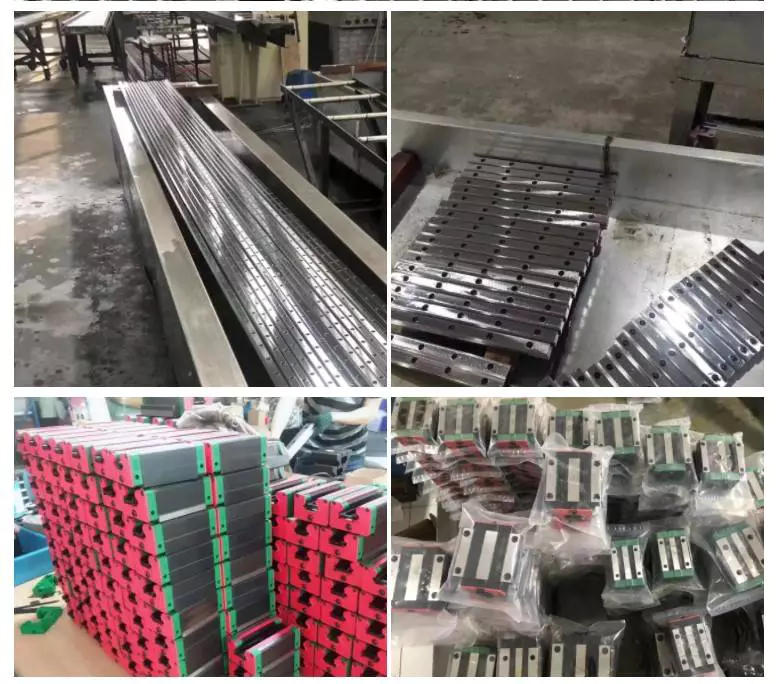
Applicazioni
Che si tratti di movimentare un piccolo oggetto all'interno di un processo produttivo o un carico pesante, le guide lineari garantiscono un movimento fluido e stabile. Le applicazioni delle guide lineari sono molteplici, tra cui l'imballaggio, l'automazione industriale, la movimentazione di campioni medicali e altro ancora.
La struttura di base delle guide lineari è un insieme composto da sfere e rulli che supportano i carichi in movimento sulla guida. Le sfere offrono un'elevata capacità di carico, mentre i rulli forniscono una guida a basso attrito.
Le guide lineari sono tipicamente utilizzate nell'industria. Offrono un'ampia gamma di movimento e possono essere impiegate sia in verticale che in orizzontale. Sono inoltre disponibili in diverse dimensioni. Il loro impiego principale è in applicazioni che richiedono elevate prestazioni, alta precisione e una guida a basso attrito.
Le guide lineari possono essere rotonde o quadrate. Sono realizzate in acciaio ad alta resistenza, solitamente zincato. La lunghezza di una guida può variare da pochi centimetri a diversi metri. Le guide lineari sono dotate di un sistema di guida a basso attrito, che contribuisce a garantire un movimento fluido e affidabile. La capacità di carico di una guida può variare da pochi grammi a migliaia di chilogrammi.
I vantaggi delle guide lineari includono basso attrito, elevata capacità di carico e alta rigidità. Queste qualità le rendono una soluzione ideale per numerose applicazioni industriali. Sono anche note come assemblaggi lineari, guide lineari e sistemi di guida.
I sistemi di guide lineari sono noti con diversi nomi, tra cui guide lineari a cuscinetti a sfera, guide lineari e sistemi di guide lineari. Questi sistemi sono tipicamente utilizzati in applicazioni che richiedono una guida a basso attrito, ma risultano utili anche nei sistemi azionati pneumaticamente. Sono facili da installare e presentano un'elevata capacità di carico.
editor by CX 2023-04-10
China DFU double nut high-quality ball screw DFU4005-4 linear rail actuator
Issue: New
Warranty: 3 months
Relevant Industries: Accommodations, Constructing Materials Stores, Manufacturing Plant, Residence Use, Retail
Excess weight (KG): ninety
Movie outgoing-inspection: Supplied
Machinery Take a look at Report: Presented
Marketing and advertising Kind: Scorching Solution 2019
Warranty of main factors: 1 12 months
Main Factors: Gear
Product Variety: DFU4005-four
Solution name: Linear Xihu (West Lake) Dis.way Rail
Sort: Linear Motion Xihu (West Lake) Dis.way
Application: Cnc Machining Areas
Performance: Clean Linear Xihu (West Lake) Dis. Rail
Construction: Slide Rail + Slide Block
Function: Long Working Life
Key phrase: Linear Rail Linear Rail
Packaging: First Packing
Support: OEM Provider
MOQ: 1 Set
Port: HangZhou HangZhou
Specification
| articolo | valore |
| Condizione | Nuovo |
| Garanzia | 3 months |
| Settori applicabili | Hotels, Building Materials Shops, Production Plant, Home Use, Retail |
| Weight (KG) | 90 |
| Video outgoing-inspection | Provided |
| Machinery Take a look at Report | Provided |
| Tipo di marketing | Hot Solution 2019 |
| Warranty of main parts | 1 Calendar year |
| Core Parts | Gear |
| Model Variety | DFU4005-four |
| Luogo di origine | Cina |
| Product identify | Linear Xihu (West Lake) Dis.way Rail |
| Type | Linear Motion Xihu (West Lake) Dis.way |
| Applicazione | Cnc Machining Elements |
| Performance | Smooth Linear Xihu (West Lake) Dis. Rail |
| Structure | Slide Rail + Slide Block |
| Caratteristica | Long Running Life |
| Keyword | Linear Rail Linear Rail |
| Packaging | Original Packing |
| Service | OEM Service |
| MOQ | 1 Set |
Choosing the Right Type of Linear Rail for Your 3D Printer
Using a linear rail in your 3D printer is a common way to provide support for the bed, but there are some drawbacks to using this type of rail. Learn about the different types of rail and how to select the best one for your project.
Square rail
Choosing the right linear rail can bring significant advantages in cost, durability and performance. Choosing the right rail type is a key step before deciding on the overall design. Choosing the correct type will depend on your application’s requirements. The selection process involves learning from past mistakes and defining the system’s objectives. Choosing the right rail isn’t unlike choosing other components for a machine.
Unlike round rail, square rails require a flat mounting surface. Moreover, square rails can’t span gaps. The rails must be aligned perfectly to achieve the desired parallelism. Square rails also need to be lubricated properly.
Square rails are used for applications that require high load capacity. Square rails are typically used for machine tool applications. They have a greater load capacity than round rails. They can handle heavy loads and moment loads. They provide high precision and accuracy. They also have more surface contact than round rails.
Generally, square rails are more expensive than round rails. Square rails are also more prone to debris. They also need tighter parallelism than round rails. Square rails also need a straight continuous support.
Square rails have higher load capacity and precision. However, they have higher maintenance costs. Square rails also need to be installed carefully. They can be prone to misapplication. Misapplication can happen due to miscalculation or personal bias. Choosing the right rail type isn’t always the right solution for your application. It’s always best to start with preliminary calculations before deciding.
Round rails are generally faster to install. They also allow for greater ranges in rail height. They can also handle imperfect parallelism. However, they also have lower load capacity. They require more parts than square rails.
They can be installed vertically or horizontally. They are also available in different sizes. CZPT provides bearing blocks in different seals. Their bearing blocks can be purchased in long, normal or short block versions. CZPT’s long block versions have a self-lubricating option.
Round rails are more forgiving than square rails. They have less tendency to pull up. They are also less prone to deflection.
CZPT(r) T
Whether you are working in the manufacturing, automotive, pharmaceutical, or food industry, CZPT (r) T linear rail assemblies can be configured for your application. These rail assemblies are manufactured from lightweight aluminum and can be customized to your specifications. They are designed to replace recirculating ball bearings, eliminating messy oil, grease, and downtime. You can download CZPT (r) T linear rail assemblies as CAD files to facilitate customization.
There are two main types of CZPT (r) T linear rails. The T-shaped design is manufactured from hard-anodized aluminum. These linear guides are designed to be lightweight, easy to install, and durable. They are perfect for applications where speed is critical.
For more than 50 years, Sealstrip has been manufacturing packaging solutions with its patented package reclosure device. In its heyday, metal bearings were the standard for package reclosure, but they proved to be expensive and often required frequent maintenance. Fortunately, CZPT (r) T linear guide systems are a better option. They are oil free, corrosion resistant, and come with a number of functional and design features that rival metal bearings.
CZPT (r) T linear rails are easy to install and maintain, so you can focus on the task at hand. Their design is efficient, allowing for the smoothest, most precise motion. CZPT (r) T rail assemblies are also available in stainless steel, making them ideal for applications in harsh environments. These bearings have a unique split adapter that makes installation easy. They are compatible with standard ball bearings. They can carry heavy loads up to 800 pounds.
In addition to CZPT (r) T linear rails, CZPT (r) family of products includes CZPT (r) R linear plain bearings, CZPT (r) S anodized aluminum shafting, and CZPT (r) slide tables. All CZPT (r) products are designed to meet your motion control component needs. They are available from 28,000 stock items. You can also order energy chain systems and chainflex continuous flex cables. These linear guides are designed to help you get the most from your manufacturing equipment. They are the ideal way to replace recirculating ball bearings.
liding contact guides
Generally, linear guides are composed of guide rails, slide bodies and bearing inserts. These systems are widely used in different applications. They are designed to reduce friction, increase power efficiency and increase overall efficiency of units. The guide can be made of steel or aluminum. The slide can be plain surface bearing or a rolling-element bearing. These types of slides have a low frictional resistance, and can be used in high speed applications.
Sliding contact guides on linear rails have sliding contact along the entire length of the rail. The sliding contact is made by a rolling-element bearing, such as a ball, roller or cam roller. Linear bearing slides can be lubricated with grease, oil or vacuum lubricant. The use of linear bearing slides helps to minimize operating temperatures and improves overall efficiency of units.
These guides are used in applications with high precision. They are a good option in applications with limited space requirements. They also provide increased load capacity while reducing the size of the unit.
The present invention provides an alternative to the prior art linear guides. It consists of a linear guide with a replaceable bearing element. This element is removable from the slider without replacing the slide body. It also eliminates the need to replace roller elements in the bearing mechanism.
The sliding contact guides on linear rails are ideal for applications with high accuracy. They are especially useful in high speed applications. They can help grippers pick up objects more accurately. They can also be used for industrial sliding doors. They are also used in a variety of robotics applications.
The sliding contact guides on linear rails can be used in a wide range of applications, from precision machinery to computer numerical control machines. They are available in different sizes and configurations, including the MINISCALE PLUS series. They can be used in vacuum conditions of up to 10-7 mbar. They are ideal for applications requiring high accuracy and reduced power consumption.
They are available in a wide range of sizes, including 7 mm to 15 mm wide. They also have travel distances of up to 42 mm. The dynamic load capacity ranges from 207 to 1109 N. They also offer accelerations of up to 50 m/s.
Drawbacks of “traditional” linear rail in a 3D printer build
Using linear rails in a 3D printer build can increase print quality, but there are also drawbacks. There are some advantages to using linear rails, but you’ll also need to consider the cost and complexity of using them.
A traditional linear rail is a rectangular piece of steel with two dovetails along each side. It’s used to mount the carriage to the printer, and it is designed to provide smoother motion than a linear rod. Despite this, a rail can also be curved, which can create problems when printing.
Another disadvantage is that a single linear rail is more expensive than two linear rods, and it requires a physical frame for mounting. However, it can save you the cost of buying two rods and can also create a unique aesthetic for your 3D printer. Another advantage is that you can anchor the rail for greater rigidity and load-bearing capacity. You’ll also need to make sure that your rails are properly lubricated for a long life. If they aren’t, you’ll likely experience problems with print quality.
The drawbacks of using a linear rail in a 3D printer build aren’t that serious, but they’re still something to consider. If you have the budget, you may want to invest in a more capable printer, rather than in a linear rail. Also, remember that the stiffer your rails are, the less backlash you’ll experience. You’ll also avoid ringing artifacts, which will make your prints look less smooth. Regardless of the type of rail you use, it’s important to make sure that you mount it correctly.
editor by czh 2023-03-19
China CNC XY Table Linear Module Guide Ball Screw Rail Motion Actuator XY Cross Slide Table Linear Slide Table with Great quality
Situation: New
Guarantee: 3 months
Relevant Industries: Producing Plant, Machinery Repair Retailers, Design works , Marketing Organization, 3D Printer
Bodyweight (KG): thirty
Video clip outgoing-inspection: Provided
Machinery Examination Report: Supplied
Marketing Variety: Regular Product
Guarantee of core components: 1 Year
Main Components: Motor
Model Variety: SW160D
Material: Stainless Metal, Aluminum, Manufacturing unit direct custom high precision metal screw knurled steering worm equipment shaft Aluminum, Stainless Metal
Kind: Linear Movement Xihu (West Lake) Dis.way
Feature: Sleek Movement
Performance: Higher Running Efficiency
Colour: Black,grey
Soon after Warranty Support: On the web assist
Packaging Specifics: Standrad Export wooden circumstance
CNC XY Desk Linear Module Xihu (West Lake) Dis. Ball Screw Rail Motion Actuator XY Cross Slide Desk Linear Slide Desk
Description
1. High rigidity and hefty load
2. Sleek operating, low sounds and non-air pollution,substantial pace
3. Higher accurancy and effortless placing up
4. Trial order is accpetable
Features
Linear bearings and guides provide reduced friction, clean, HK1612 Needle Bearing 16x22x12 Needle Bearings precise movement for almost any moment or typical loading problem.
one. Dynamic and static friction resistance variation is tiny, which is useful to increase the reaction velocity and sensitivity of CNC system
two. The driving energy is modest which reduces the energy use
3. Higher positioning precision and repeat positioning ccuracy
four. By increasing the preload, the rigidity is drastically enhanced
five. Employing paired information rails, it has the impact of homogenizing mistake
Applicazione
1. Machining center2. Machine tools,3. Precision processing4. Large chopping equipment,5. Marble cutting machine6. Grinder7. Injection machine8. Punch9. Automation devices, 50kw 100kw 150kw 200kw 500kw 750kw 1000kw 1250kw 1500kw 2000kw 2500kw DC Motor ten. Transportation equipment11. Measuring instrument
Firm Info
Why Decide on Us
Make contact with US
CNC XY Table Linear Module Xihu (West Lake) Dis. Ball Screw Rail Motion Actuator XY Cross Slide Table Linear Slide Table
Applications and Maintenance of a Linear Rail
Whether you are looking to install a linear rail or you are looking for ways to maintain your existing one, there are some important factors to consider. In this article, you will learn about the applications for linear rails, the maintenance of a linear rail, and some of the common issues associated with linear guides.
Common issues with linear guides
Choosing the right linear guide can yield significant advantages in performance, cost and durability. However, it isn’t enough to just pick the right guide. To ensure maximum performance, you need to understand the components and technologies that go into the design. This article will highlight some of the most common problems associated with linear guides, and how to avoid them.
The most important thing to remember about a linear guide is that it is a component of a system. It should not be operated alone. If a linear guide fails, you’ll need to take steps to get it repaired.
A good way to gauge how well a guide will perform is to look at the load moments it carries while on a wall. This will tell you how much the guide can support over a full run of travel.
One of the most important things to consider is the type of mounting you use. It should match the precision of the guide unit. The mounting surface should be flat, and there should be no gaps or wiggles between the guide unit and the mounting surface.
The right kind of mounting will not only make installation easier, but will also ensure that your guide unit operates at its best. In addition, it can help prevent contamination from getting into the guide unit.
Another thing to consider is the quality of the lubricant. Linear guides are prone to corrosion, so it’s important to lubricate them regularly. You can do this by adding a high-quality lubricant that’s resistant to corrosive substances.
Using a linear guide with a good seal can help avoid corrosion. A good seal should have sealing lip that fits tightly around the ball guide profile. In addition, you should consider a thicker lubricant, such as calcium soap, as opposed to standard greases in wet environments.
Another thing to consider is how you can best align the guide unit. For example, you can use a high-speed end cap to reduce misalignment. This will reduce binding, as well as prevent a buildup of dirt and other debris between the guide unit and the mounting surface.
Common applications for linear rails
Across industrial applications, there are many uses for linear rails. Linear rails provide an extremely effective way of moving products and items through production processes. They offer excellent load capacity, low friction and high stiffness.
Linear rails can be manufactured in short or long lengths. These systems are ideal for moving loads from a few grams to thousands of kilograms. Depending on the specific application, the load capacity of the rail may vary.
Linear rails are commonly used in machine-tool applications and semiconductor manufacturing. Linear rails are also used for moving heavy equipment through factory floors. Linear rails are also used in advanced medical applications.
Linear rails can be used on a variety of surfaces. Depending on the type of application, the orientation of the rail may vary. This depends on the type of load and the amount of force being applied. It may also be influenced by the amount of dirt and dust.
Linear rails are designed to support loads from a few grams to thousands of kilograms. They are used in a variety of industries, including semiconductor manufacturing, packaging and medical devices. In many applications, linear rails are also used as the guide for actuators. Linear rails are a useful alternative to complex alignment operations.
Linear rails are often used in overhead transport systems. Linear rails are usually made of high strength steel and are profiled for maximum rigidity. They also have nickel-plating for corrosive environments.
Linear rails are often used in factory floors for heavy equipment, like moving robot arms. These systems can be used to move items around the factory floor or on high platforms above walkways. Linear rails are also used in the food and beverage industry. They are commonly used in weighing machines and CNC machines.
Linear rails are ideal for moving products with minimal friction. They also are used in semiconductor manufacturing, where the need for precision is crucial. Linear rails provide high load capacity and can accommodate travel speeds of up to five meters per second. Linear rails are also used in many transportation lines, including ice machines.
Cost of linear rails
Choosing the right linear rail can have a significant impact on the cost and performance of your system. Linear rails are used in all kinds of industries. They are highly effective when it comes to moving goods and equipment through the manufacturing process. They can be used vertically or horizontally. They are anchored to aluminum extrusion profiles for increased stiffness and accuracy.
The cost of linear rails can be justified by the advantages they offer. They provide high levels of rigidity and load capacity, making them a good option for moving products with minimal friction. Linear rails are also less likely to bend or vibrate. They also have a higher degree of precision and accuracy.
The price of linear rails is higher than those of linear rods. This is due to the fact that linear rails require more screws per unit length. They also require more support. If the rails are not supported, they will bend or rattle. The rails must be fully supported to achieve optimal precision.
Linear rails offer the most rigidity against gravity. They can support loads ranging from a few grams to several tons. They can also withstand moment and lift-off loads.
Rails can be installed using hex slot screws. They require more screws per unit length than rods. They also require accurate mounting surfaces. They can be installed by hand or with tools.
Linear rails are less likely to bend than rods, making them a better option for low precision applications. They are also cheaper.
However, they are not suitable for consumer applications. Rails are not as durable as rods and they are susceptible to bending and vibration. They are also subject to shipping oil and corrosion during transport and storage.
Linear rails cost around 2.5 to 4 times as much as linear rods. This is because they are more expensive to manufacture. They also require a more complex assembly process. They require hex slot screws along the length of the rail. It can be difficult to install.
The lifespan of linear rails is a frequently asked question among design engineers. It’s important to consider the factors that will reduce the lifespan.
Manutenzione delle rotaie lineari
Whether you’re working with a linear rail system in an industrial environment or a consumer application, proper maintenance is critical. A well-maintained linear guide rail can withstand loads from a few grams to thousands of kilograms, providing a high degree of rigidity and load capacity.
The most important aspect of maintenance for a linear guide rail is lubrication. Proper lubrication reduces friction and wear, resulting in longer life for your guide rail. The amount of lubrication required depends on the environment in which it is being used and the frequency of use. Generally, a general purpose lubricant is adequate for low speed low load applications. However, when long lubrication cycles are required, a specialised bearing lubricant is necessary.
The components of a linear guide rail are comprised of rail, carriage, linear guide block and load supporting rollers. The rails and guide blocks are made of hardened steel or anodized aluminum. The carriage has two “wings” that align with the rail channel. The rollers are made of softer materials such as stainless steel. A lint-free paper towel can be used to clean the groove in the rail.
If a linear guide rail is used incorrectly, it can corrode. In order to maintain the integrity of the rail, it is important to clean it thoroughly. The lubrication mechanism is often accessed via a syringe, so cleaning the rail is relatively easy. Clean the rail with a shop towel, and then apply grease to the moving parts. This will smooth the motion of the ball screw guides and prolong the life of the linear slides.
If the linear guide is used incorrectly, it can cause excessive misalignment, indentations, and corrosion. It is recommended that the rail be cleaned and lubricated as needed.
The type of linear rail you choose will depend on the type of load it can handle. Aside from the load capacity, it is also important to consider the cost of maintenance. Typically, a linear rail system is more expensive than other systems, so you’ll want to make sure you get the right rail for the job.
editor by czh 2023-03-19
China 300mm stroke customized low price Ball Screw Linear Motion Actuator Guide Rail Ways For Engraving with 23 nema step motor linear rail direct drive
Issue: New
Guarantee: 1.5 a long time
Applicable Industries: Machinery Mend Stores
Design Number: DBX1204J-100
Content: Aluminum+stainless steel
Xihu (West Lake) Dis. Width: 42MM
Xihu (West Lake) Dis. Duration:: 50MM-1000MM
Product Material: Aluminum+stainless steel
Motor kind: Nema 23 stepper motor
Ball Screw Diameter: 12/16mm
Ball screw direct: 4mm/5mm/10mm
Horizontal load: 5-20kg
Vertical load: ~8kg
With no load pace: -150mm/s
Positional precision: 300mm/.03mm
Packaging Specifics: polyfoam, cardboard carton
300mm stroke customized minimal price tag Ball Screw Linear Movement Actuator Xihu (West Lake) Dis. Rail Ways For Engraving with 23 nema stage motor
SpecificationsDBX1204J-100 linear information is semi-sealer structure, physique width 42mm, higher security,compact composition, NMRV090 Collection wpa worm equipment reducer digital variator hollow shaft motor pace variator bevel helical gearbox flexibility feature, suited for standard working environment, it is practical to use solitary axis or multi-axis to assemble simple functional usage robotic arms for varieties of industries.
Software Location:
Exact positioning, dispensing, spray painting, 7030 ACDP4A CZPT Super Precision CZPT CZPT CZPT Angular Speak to Ball Bearings CZPT Angular Speak to Ball Bearings visual inspection, relocating, grabbing, slicing and welding, automatic assembly, nema17 guide screw stepper motor linear slide stepper motor automatic locking screws, palletizing, and so on. These kinds of as: PCB board detection, optical disc stacking device, areas select and place.
| Product | DBX Ball screw | Screw speed | -150mm/s |
| Profile width | 42mm | The vertical load (kg) | 8KG |
| Specifications of ball screw | 1204, Large Quality CV AXLE JOINT OUTER CV JOINT FOR Audi OEM 4E0498099A Dimensions 27X59.5X38 1605,1610 | Horizontal load (kg) | 20KG |
| PositionaI accuracy | .03mm | Powerful travel range | -1000mm |
Get a price cut
| Associated Goods |
| stage motor | motor driver |
Related items You could like Our Services
Business Information
Our Certificate
Come ottenere la massima durata dalle vostre guide lineari
Che siate alla ricerca della robustezza dell'acciaio o della praticità dell'alluminio, le guide lineari possono rappresentare la soluzione ideale. Sono in grado di sopportare carichi sia verticali che verticali e possono essere ancorate per tutta la loro lunghezza a profili estrusi in alluminio.
Manutenzione delle rotaie lineari
A seconda dell'ambiente in cui vengono utilizzate le guide lineari, la quantità di manutenzione richiesta varierà. Tuttavia, ci sono alcuni accorgimenti fondamentali che è possibile adottare per garantire la massima durata delle guide.
Il primo passo è assicurarsi di installare le guide su una base solida e livellata. Se le guide non sono in piano, potrebbero formarsi delle ammaccature, che possono causare diversi problemi.
Il secondo passo è assicurarsi di utilizzare il lubrificante corretto. Il lubrificante giusto può fare la differenza nella durata delle guide. I migliori lubrificanti sono quelli progettati per resistere all'ambiente in cui verranno utilizzati. Idealmente, si dovrebbe utilizzare un olio leggero sulle piste di rotolamento dei cuscinetti a sfera.
Il modo migliore per assicurarsi di fare tutto correttamente è utilizzare un set di comparatori a quadrante per verificare che le rotaie siano in piano. Inoltre, è importante non fare affidamento esclusivamente sulla guida per mantenere le rotaie in piano. È anche consigliabile pulire le rotaie con un panno privo di lanugine.
La parte più importante di qualsiasi guida lineare è il suo sistema di lubrificazione. La maggior parte è dotata di un meccanismo di lubrificazione che semplifica la manutenzione. Se la tua non lo è, potresti prendere in considerazione un kit di grasso e lubrificazione di CZPT Automation.
Basso coefficiente di attrito
Che siate alla ricerca di una semplice guida lineare o di una guida sofisticata che supporti l'intera macchina, le opzioni a disposizione sono molteplici. Ognuna presenta vantaggi e svantaggi specifici. Esistono inoltre diversi livelli di precisione, velocità di funzionamento e capacità di carico.
Ad esempio, per le applicazioni di lavorazione dei metalli potrebbe essere necessario un tipo di acciaio resistente alla corrosione. Tuttavia, lo stesso tipo di acciaio può presentare un elevato coefficiente di attrito.
Per ridurre l'attrito, è possibile scegliere una catena con una maglia superiore a basso attrito. Queste catene possono raggiungere bassi coefficienti di attrito anche senza lubrificazione.
Un'altra opzione è quella di utilizzare una catena a rulli in plastica. Questa soluzione è ideale per applicazioni che richiedono uno slittamento minimo tra le superfici. Queste catene sono progettate per avere bassi coefficienti di attrito, grazie alla combinazione di stampaggio a compressione e matrice polimerica in resina epossidica.
Il catalogo del produttore elenca il coefficiente di attrito dei diversi tipi di catena superiore. Questo è un buon modo per vedere la differenza tra una guida a sfere e una guida a rulli.
Il coefficiente di attrito di una sfera d'acciaio rotolante è un buon indicatore delle sue prestazioni. Questo è uno dei motivi per cui vengono utilizzate nelle parti in movimento. Ed è anche uno dei motivi per cui la serie MSA di PMI è progettata con un basso coefficiente di attrito.
Un basso coefficiente di attrito può far risparmiare denaro ed energia. Inoltre, aumenta la durata della catena, del motore e degli altri componenti di movimento lineare.
Rigidità
Sia per le macchine utensili che per le applicazioni di consumo, la rigidità delle guide lineari è un fattore importante. Se una guida lineare non è allineata correttamente, può presentare un elevato grado di flessione, con conseguenti danni. Anche la durata di una guida lineare dipende da una serie di fattori.
Se la rotaia non è allineata correttamente, il carico applicato su di essa seguirà la superficie su cui è avvitata. Ciò può causare problemi di allineamento.
Se la rotaia ha un diametro grande, potrebbe essere più facile allinearla rispetto a una più piccola. Può anche essere utile far passare due rotaie in parallelo. Questo ridurrà al minimo la flessione.
La rigidità di una rotaia lineare è determinata anche dalla sua capacità di carico. La capacità di carico di una rotaia può variare da pochi grammi a migliaia di chilogrammi. Maggiore è la capacità di carico, migliore è la rigidità della rotaia.
Le guide lineari sono tipicamente utilizzate in sistemi di alta precisione. Possono sopportare carichi di momento e carichi a sbalzo. La durata di una guida lineare dipende anche dalla capacità di carico e dalla frequenza di utilizzo.
La rigidità di una rotaia può essere determinata anche dal suo angolo di contatto iniziale. In generale, una rotaia lineare ha una rigidità maggiore di una barra lineare.
La rigidezza di una rotaia lineare può essere misurata sia sperimentalmente che mediante un'analisi agli elementi finiti (FEA). Un'analisi FEA può essere utilizzata anche per determinare il comportamento statico e dinamico di una guida lineare. I risultati ottenuti possono essere impiegati per determinare la rigidezza di diverse strutture.
Possono essere ancorati per tutta la loro lunghezza a profili estrusi in alluminio.
Fortunatamente per noi, CZPT offre una vasta gamma di prodotti tra cui scegliere. Dalle onnipresenti estrusioni di alluminio con scanalatura a T ai più piccoli elementi decorativi, CZPT ha tutto ciò che vi serve. Non solo dispone di un'ampia selezione di elementi di fissaggio ed estrusioni di alluminio in magazzino e pronti per la spedizione, ma CZPT offre anche una serie di servizi e soluzioni per aiutarvi a portare a termine il lavoro nel modo giusto. Che siate alla ricerca di un nuovo magazzino o abbiate bisogno di aiuto per progettare e realizzare un prodotto personalizzato, CZPT può aiutarvi. Il nostro team di artigiani qualificati collaborerà con voi dall'inizio alla fine per garantire che il vostro progetto di estrusione di alluminio sia realizzato a regola d'arte. Nessun lavoro è troppo grande o troppo piccolo per noi. Tra i nostri clienti figurano produttori di prodotti di livello industriale e commerciale, nonché piccole imprese e privati che desiderano distinguersi. Dalle attrezzature per cucine professionali agli armadi industriali, possiamo aiutarvi a trasformare le vostre idee in realtà. Per ulteriori informazioni, visitate il nostro sito web per scoprire di più sulla nostra vasta gamma di prodotti e soluzioni. Il nostro team di esperti sarà lieto di rispondere a qualsiasi domanda sul vostro progetto di estrusione di alluminio e può anche assistervi con servizi di progettazione CAD. Qualunque siano le vostre esigenze, CZPT può aiutarvi. Gran parte del nostro successo deriva dalla nostra capacità di essere un fornitore unico per un'ampia gamma di soluzioni di estrusione.
Applicazioni
Che si tratti di movimentare un piccolo oggetto all'interno di un processo produttivo o un carico pesante, le guide lineari garantiscono un movimento fluido e stabile. Le applicazioni delle guide lineari sono molteplici, tra cui l'imballaggio, l'automazione industriale, la movimentazione di campioni medicali e altro ancora.
La struttura di base delle guide lineari è un insieme composto da sfere e rulli che supportano i carichi in movimento sulla guida. Le sfere offrono un'elevata capacità di carico, mentre i rulli forniscono una guida a basso attrito.
Le guide lineari sono tipicamente utilizzate nell'industria. Offrono un'ampia gamma di movimento e possono essere impiegate sia in verticale che in orizzontale. Sono inoltre disponibili in diverse dimensioni. Il loro impiego principale è in applicazioni che richiedono elevate prestazioni, alta precisione e una guida a basso attrito.
Le guide lineari possono essere rotonde o quadrate. Sono realizzate in acciaio ad alta resistenza, solitamente zincato. La lunghezza di una guida può variare da pochi centimetri a diversi metri. Le guide lineari sono dotate di un sistema di guida a basso attrito, che contribuisce a garantire un movimento fluido e affidabile. La capacità di carico di una guida può variare da pochi grammi a migliaia di chilogrammi.
I vantaggi delle guide lineari includono basso attrito, elevata capacità di carico e alta rigidità. Queste qualità le rendono una soluzione ideale per numerose applicazioni industriali. Sono anche note come assemblaggi lineari, guide lineari e sistemi di guida.
I sistemi di guide lineari sono noti con diversi nomi, tra cui guide lineari a cuscinetti a sfera, guide lineari e sistemi di guide lineari. Questi sistemi sono tipicamente utilizzati in applicazioni che richiedono una guida a basso attrito, ma risultano utili anche nei sistemi azionati pneumaticamente. Sono facili da installare e presentano un'elevata capacità di carico.
editor by czh 2023-03-17
China Rxs-42 Xy Table Gantry Linear Module Robotic Arm Rod Ball Screw Guide Sliding Table Motion Rail Actuator Motorized Router supplier
Descrizione del prodotto
Buy Instruction:
About product:
Remember to make contact with client service prior to putting the get to confirm the requirements and designs of the module,so as not to cause inconvence.
About Customization:
Customization demands deposit. For information, remember to contact buyer support. Customized products are not refundable after sold.
About Shipping:
Shipping and delivery of standard merchandise is scheduled in 7 times and non-stangard customized goods are scheduled inside of 30 days.
|
US $420-730 / Pezzo | |
1 pezzo (Ordine minimo) |
###
| Caratteristica: | Vacuum, Magnetically, Low Temperature, High Temperature, High Speed |
|---|---|
| Function: | Super |
| Flange Shape: | Cutting-Edge |
| Shape: | Open |
| Series: | LM |
| Materiale: | acciaio inossidabile |
###
| Personalizzazione: |
Disponibile
|
|---|
|
US $420-730 / Pezzo | |
1 pezzo (Ordine minimo) |
###
| Caratteristica: | Vacuum, Magnetically, Low Temperature, High Temperature, High Speed |
|---|---|
| Function: | Super |
| Flange Shape: | Cutting-Edge |
| Shape: | Open |
| Series: | LM |
| Materiale: | acciaio inossidabile |
###
| Personalizzazione: |
Disponibile
|
|---|
Guida di contatto scorrevole su rotaia lineare
Che si tratti di guide a coda di rondine, guide di contatto scorrevoli, guide a cuscinetto a manicotto o guide a sezione scatolare, esamineremo alcune delle opzioni a vostra disposizione. Scoprirete a cosa servono, come possono esservi utili e come possono migliorare il vostro lavoro.
Binari a coda di rondine
Sul mercato sono disponibili diverse varietà di guide a coda di rondine. Tra queste, le guide standard a sezione quadrata e una variante più specializzata. Queste guide sono note per il loro aspetto elegante e robusto e possono sopportare carichi ancora più pesanti rispetto alle altre.
Le piattaforme lineari a coda di rondine compatte della serie DS sono le più piccole della gamma, pur mantenendo lo stesso meccanismo delle piattaforme a coda di rondine della serie MT. Scorrono lungo guide a coda di rondine precaricate di precisione, risultando la scelta ideale per applicazioni che richiedono elevate prestazioni in spazi limitati. Queste piattaforme sono inoltre meno soggette a urti rispetto ai modelli convenzionali.
Le piattaforme a coda di rondine della serie DS sono disponibili in diverse configurazioni XYZ, il che le rende ideali per applicazioni che richiedono movimenti estremamente fluidi e vibrazioni minime. Grazie al loro design modulare, queste piattaforme sono anche facili da integrare nel sistema. Ciò è particolarmente vero per la serie DS25, che presenta un ingombro inferiore rispetto alla serie MT.
Le piattaforme a coda di rondine compatte della serie DS rappresentano un passo avanti rispetto alle piattaforme a coda di rondine della serie MT. Ciò è dovuto alle loro guide a coda di rondine precaricate ad alta velocità e precisione. Queste piattaforme non sono solo leggere, ma anche silenziose, una caratteristica particolarmente utile nelle applicazioni medicali. Presentano il già citato design a basso profilo, nonché selle più spesse e robuste. Sono inoltre disponibili in due diverse corse.
Sebbene le guide a coda di rondine su binari lineari possano essere una buona scelta per il vostro prossimo progetto, è opportuno considerare alcuni fattori che possono ridurne la durata. Tra le cause più comuni di guasto vi sono abrasioni, corrosione e polvere. Potreste anche valutare l'utilizzo di una piattaforma da fissare al componente mobile del vostro sistema. Ciò vi consentirebbe di ampliare l'area di trasporto, mantenendo comunque il carico a portata di mano.
Le piattaforme a coda di rondine compatte della serie DS rappresentano un'ottima scelta per applicazioni che richiedono movimenti estremamente fluidi e un numero ridotto di componenti. Ciò è particolarmente vero per le piattaforme a coda di rondine della serie DS, che non utilizzano i tipici cuscinetti a rulli.
Guide a cuscinetti a manicotto
A seconda dell'applicazione, esistono diversi tipi di guide lineari. La più comune è la guida a cuscinetti a sfera, che utilizza due file lineari di cuscinetti a sfera per muovere un carrello. Questa configurazione offre un movimento fluido in un'unica direzione.
Un altro tipo di guida è la guida a coda di rondine. Essa presenta una fessura sulla base della guida e una linguetta sporgente a forma di V sulla sella. Questo design è più resistente rispetto ad altre guide e può essere utilizzato per applicazioni con carichi pesanti. Tuttavia, non può sopportare carichi elevati come le guide a sezione rettangolare, che prevedono una base e una sella di accoppiamento.
Un terzo tipo di slitta è la slitta a colonna cilindrica. È funzionalmente simile alla slitta a sezione quadrata, ma non possiede la stessa robustezza e rigidità. Solitamente è più costosa e più difficile da assemblare, sebbene offra una forma di movimento lineare meccanico più precisa.
La superficie interna di un cuscinetto a strisciamento lineare è generalmente costituita da una guida. Si tratta di un metodo comune per ridurre l'attrito tramite un rivestimento superficiale. Alcune di queste guide sono realizzate in CZPT, un materiale inerte agli acidi e ai solventi, progettato per funzionare in diversi ambienti.
Esistono diversi tipi di boccole, e ognuna può essere realizzata con una vasta gamma di leghe. Le boccole in bronzo sono progettate per un movimento fluido, mentre le boccole in plastica sono adatte per applicazioni a bassa velocità.
Per applicazioni che richiedono un funzionamento ad alta velocità, i cuscinetti lineari a manicotto possono essere realizzati con elementi volventi in ceramica. Questi offrono minore rumorosità e una migliore distribuzione del carico.
Un altro tipo di guida lineare è la guida a sezione scatolare. Essa comprende una base di accoppiamento e una sella. Viene spesso utilizzata per applicazioni gravose. Una terza sezione può essere fissata alla sella, estendendo la lunghezza della guida. Queste guide, una volta installate, offrono un profilo a T.
La guida a sezione quadrata è una scelta eccellente per applicazioni gravose. Offre un movimento lineare preciso e un'elevata capacità di carico. Può essere fresata, forata o filettata. Presenta un basso attrito e può sopportare forze in qualsiasi direzione.
Il design CZPT offre prestazioni eccellenti sia in ambienti lisci che in quelli più difficili. Inoltre, la sua lunghezza lo rende ideale per installazioni di grandi dimensioni.
Guide di contatto scorrevoli
La scelta di una guida di contatto scorrevole su una rotaia lineare può essere complessa. Data la varietà di opzioni disponibili, è importante comprenderne le differenze e i vantaggi che offrono.
Il primo aspetto da considerare è il materiale utilizzato. Acciaio inossidabile, alluminio o ghisa sono materiali comunemente impiegati per le guide di scorrimento. Questi materiali sono resistenti e in grado di sopportare carichi pesanti. Possono essere utilizzati anche in ambienti corrosivi.
Un altro fattore importante è il metodo di lubrificazione. La quantità di lubrificante necessaria è determinata in gran parte dal tipo di guida lineare e dal tipo di cuscinetti utilizzati. Le guide con cuscinetti a sfera in genere richiedono meno lubrificazione rispetto alle guide con cuscinetti lineari. Il metodo di lubrificazione è importante anche perché riduce l'attrito che causa l'usura.
L'aspetto più importante del metodo di lubrificazione è che sia facilmente accessibile e pulibile. Questo garantisce le migliori prestazioni della guida lineare. È inoltre possibile optare per un sistema di lubrificazione più performante per prolungarne la durata.
Un altro fattore importante è la dimensione dell'applicazione. Una maggiore capacità consentirà alla guida di trasportare un carico più pesante. È inoltre possibile scegliere una guida ad alta velocità se l'applicazione prevede velocità elevate. Anche la lunghezza della guida deve essere considerata. La lunghezza è solitamente determinata dalle dimensioni dell'applicazione. È anche possibile personalizzare la lunghezza della guida contattando l'ufficio vendite più vicino.
La differenza principale tra le guide a contatto scorrevole su rotaia lineare e le altre guide lineari risiede nell'entità dell'attrito. Maggiore è la forza applicata, maggiore sarà il coefficiente di attrito. Pertanto, questo tipo di guida non è adatto per applicazioni ad alta velocità.
La prima sfera di ricircolo è stata sviluppata da Thomson Linear. Si è trattato del primo elemento volvente commercializzato. La sfera ha un coefficiente di attrito molto inferiore rispetto a un rullo. Per questo motivo viene spesso utilizzata nelle applicazioni di controllo del movimento.
Un funzionamento ad alta velocità richiederà una lubrificazione maggiore rispetto a un funzionamento a bassa velocità. Il rivestimento E-DFO del lubrificante avrebbe una durata maggiore rispetto al rivestimento in fluororesina.
Binari per la linea di scatole
A differenza delle guide lineari convenzionali, che sono costituite da un sottile strato di olio lubrificante tra di esse, le guide a sezione scatolare scorrono per attrito radente. I sistemi a sezione scatolare sono realizzati in un materiale resistente, come l'acciaio, e sono in grado di gestire carichi più pesanti rispetto alle guide a coda di rondine. Sono inoltre più efficaci nell'assorbire i carichi d'urto. Tuttavia, la loro durata è inferiore a quella delle guide lineari. I centri di lavoro verticali con guide lineari sono spesso due o tre volte più veloci delle loro controparti a sezione scatolare.
Il materiale più comunemente utilizzato nelle guide lineari è l'acciaio. Solitamente viene prodotto con elevata precisione e successivamente classificato in base all'applicazione specifica. Le piastre di appoggio presentano transizioni fluide e possono sopportare carichi crescenti man mano che diventano convesse. Questa configurazione le rende ideali per la lavorazione dell'acciaio.
Sebbene la rotaia lineare abbia una maggiore capacità di carico, il sistema di guide a cassone rimane comunque relativamente piccolo. Le guide a cassone possono sopportare carichi maggiori rispetto alle guide a coda di rondine. Tuttavia, non sono in grado di gestire velocità di marcia elevate. Sono inoltre considerate più efficaci nel ridurre le vibrazioni.
I componenti principali di una guida lineare sono il carrello principale e i cuscinetti. Questi ultimi incorporano viti di potenza e cuscinetti a sfere. La differenza principale tra i due tipi di cuscinetti risiede nel fatto che i cuscinetti a sfere possiedono elementi volventi che riducono l'attrito. I cuscinetti a elementi volventi offrono inoltre un'elevata sensibilità e un basso attrito tra gli elementi volventi e la guida.
Le guide a cassone offrono anche una migliore capacità di smorzamento delle vibrazioni. Tuttavia, non sono ideali per le applicazioni di consumo. Sono inoltre molto più costose delle guide lineari. Il costo è compensato dal fatto che richiedono meno manutenzione. Si raccomanda pertanto l'utilizzo di sistemi a cassone in applicazioni gravose.
Le guide lineari rappresentano una valida alternativa alle guide a sezione scatolare. Tuttavia, richiedono un supporto completo durante l'assemblaggio e una maggiore lubrificazione. Inoltre, possono essere danneggiate dall'acqua e da altri solventi e necessitano di protezione durante il trasporto.
Le guide a scatola sono utilizzate in alcune macchine di grandi dimensioni, mentre le guide lineari sono impiegate in macchine più piccole. Questi tipi di guide sono generalmente utilizzati nei centri di lavoro per la produzione di componenti. Possono essere impiegati anche nelle macchine utensili per la sgrossatura.
editor by czh 2022-12-22